Moneyball: The Art of Winning an Unfair Game by Michael Lewis is a 2003 business book about data-driven decisions, competitive advantage, talent evaluation. Market inefficiencies persist longest where feedback loops are slow and evaluation criteria are inherited rather than tested. Baseball scouts were measuring the wrong things for a century because nobody examined the assumption.
Summary
Moneyball is Michael Lewis's account of how Billy Beane, general manager of the Oakland Athletics, used statistical analysis to compete against teams with payrolls three times larger. The Oakland A's couldn't outspend the Yankees. What they could do was find players the rest of baseball systematically undervalued — and exploit the gap between what traditional scouts believed and what the numbers actually showed.
The book follows the 2002 season as Beane and his Harvard-educated assistant Paul DePodesta build a roster around on-base percentage, a stat most teams ignored in favor of batting average and scout intuition. Lewis weaves in the intellectual history of sabermetrics — the statistical movement pioneered by Bill James, a night security guard who spent decades writing Baseball Abstracts that almost nobody in professional baseball read. The A's were essentially the first organization to take James's ideas seriously and translate them into roster decisions.
Lewis is sharp on why the market inefficiency existed in the first place. Baseball had a century-long tradition of evaluating players through scouts who trusted their eyes, their instincts, and a set of observable traits — good face, good body, quick bat — that correlated poorly with actual performance. The scouts weren't stupid; they were operating on bad feedback loops. A player looked like a major leaguer. The scouts said so. He got signed. Whether he actually helped win games was harder to track and easier to explain away. The people doing the evaluation weren't the same people suffering the consequences of being wrong.
The book is also a story about institutions resisting information that threatens existing hierarchies. The A's success didn't immediately change how baseball worked — teams with money could afford to be wrong, and the sport's old guard had decades invested in the old methods. Lewis tells the story with more empathy for the scouts than you might expect, which keeps it from becoming a simple parable about data beating gut feeling. The argument is more specific: in markets where the feedback is slow and the evaluation criteria are inherited rather than examined, statistical thinking finds edges. That applies well beyond baseball.
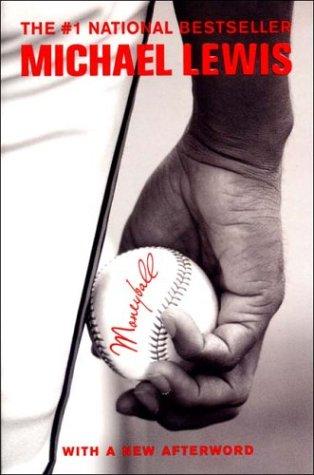
Talk to Moneyball: The Art of Winning an Unfair Game like its author wrote you back.
Get the ideas that fit your life — not generic summaries.
- Chat with the book
- Audiobook-style main ideas
- Adapts to your life and goals
- Helps you take action
Key takeaways
- 1.
Market inefficiencies persist longest where feedback loops are slow and evaluation criteria are inherited rather than tested. Baseball scouts were measuring the wrong things for a century because nobody examined the assumption.
- 2.
On-base percentage — how often a batter reaches base — predicts runs far better than batting average, yet it was systematically underpriced in the baseball labor market in the late 1990s.
- 3.
The Oakland A's competitive advantage wasn't just using statistics. It was using statistics nobody else was using yet. Once other teams caught up, the edge disappeared and Oakland had to find new inefficiencies.
- 4.
Bill James spent decades as an outsider writing about baseball analytics with almost no professional following. The A's success validated his work retrospectively, but the ideas had been available for years before anyone with money acted on them.
- 5.
Scouts evaluated tools — speed, arm, bat speed — rather than results. Lewis argues this is backwards: results are what you're actually trying to predict, and the correlation between conventional tools and results is weaker than scouts believed.
- 6.
The people doing the player evaluation were insulated from the consequences of bad decisions. Scouts who were wrong about a prospect rarely faced direct accountability. That insulation let bad models survive far longer than they should have.
- 7.
Paul DePodesta's approach was to build a model of what wins games, then find the cheapest inputs that satisfy the model. This sounds obvious stated plainly. Almost nobody in baseball was doing it.
- 8.
Moneyball's central insight generalizes: wherever expert judgment operates on weak feedback and inherited criteria, there is room for a systematic, evidence-based challenger to outperform.
Discussion questions
Use these on your own, with a book club, or as chat starters in Superbook. Book club version, ready to copy or print →
- 1.
Lewis argues the scouts were operating on bad feedback loops rather than being irrational. Does that distinction matter? Where in your own professional life do you rely on criteria you've never actually tested?
- 2.
The A's advantage depended on other teams not yet understanding on-base percentage. Once they understood it, the edge vanished. What does that say about the shelf life of any analytical insight?
- 3.
Bill James wrote his Baseball Abstracts for years before anyone in professional baseball paid serious attention. What ideas in your field are circulating outside the mainstream right now that might prove correct in a decade?
- 4.
The scouts in the book aren't portrayed as fools. They're portrayed as people whose incentives didn't punish them for being wrong. How much of expert consensus in any field is maintained by similar insulation from consequences?
- 5.
Lewis shows the A's success was partly a story about a general manager with the organizational power to override the scouts. What conditions have to be in place for data to beat institutional habit in your own organization?
- 6.
Billy Beane famously refused to watch A's games, believing his emotional reaction to in-game events would distort his judgment. What decisions in your life would benefit from the same kind of deliberate distance?
- 7.
The book was published in 2003. By 2010, every major league team had a sabermetrics department. What does that trajectory tell you about how long competitive advantages based on information asymmetry actually last?
- 8.
Kevin Youkilis, nicknamed 'The Greek God of Walks,' was one of DePodesta's finds: ugly mechanics, terrible scout reviews, excellent on-base percentage. What talent in your field looks wrong by conventional metrics but gets results?
- 9.
Lewis draws a line between what scouts could see and what they couldn't easily measure. What important things in your field are underweighted simply because they're hard to observe or quantify?
- 10.
The book implies that willingness to look foolish in the short term is a prerequisite for unconventional success. What unconventional view about your work would you act on if you weren't worried about how it looked?
- 11.
Beane traded popular players the team loved in order to stay rational about roster construction. What's an equivalent decision in your own life — something that would make sense analytically but feel wrong socially?
- 12.
Moneyball made sabermetrics famous outside baseball. Do you think increased data availability in any domain eventually leads back to a new kind of conventional wisdom, just made of different metrics?
Themes
Frequently asked questions
-
What is Moneyball actually about?
It's a narrative account of how the Oakland Athletics, one of baseball's poorest teams, used statistical analysis to compete against far wealthier franchises in the early 2000s. Lewis uses it as a lens for a broader argument about market inefficiency and how expert judgment can be systematically wrong for decades.
-
Is Moneyball worth reading if you don't follow baseball?
Yes. Lewis uses enough context that baseball knowledge isn't required, and the core argument — that inherited evaluation criteria often survive long past their usefulness — applies to almost any field where experts make judgments under uncertainty. The baseball is the vehicle, not the destination.
-
How long does it take to read Moneyball?
Around five to six hours at an average reading pace. Lewis writes quickly and the narrative structure makes it feel faster than the page count suggests. It rewards slower reading when he gets into the statistical arguments, but most readers finish it in a weekend.
-
Did the Moneyball approach actually work long-term?
The 2002 A's won 103 games with one of baseball's lowest payrolls, which validated the method. But within a few years other teams adopted similar analytics, eliminating the edge. The book is partly a story about how competitive advantages based on information asymmetry have built-in expiration dates.
-
How does Moneyball compare to The Big Short?
Both are Lewis books about markets mispricing things that systematic analysis can identify. Moneyball is more optimistic in tone — the protagonists win, at least for a season. The Big Short is darker and more consequential. Moneyball reads faster and is the better starting point if you haven't read Lewis before.
Similar books
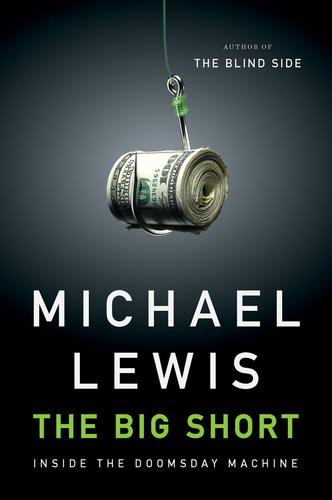
The Big Short: Inside the Doomsday Machine
Michael Lewis
Freakonomics
Steven D. Levitt and Stephen J. Dubner
Outliers: The Story of Success
Malcolm Gladwell
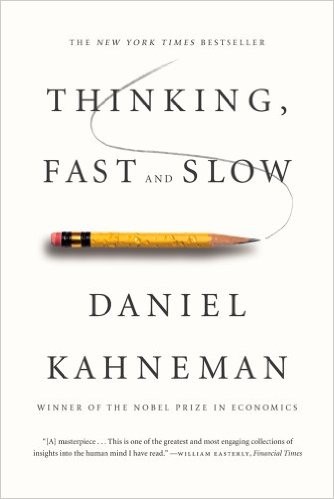
Thinking, Fast and Slow
Daniel Kahneman
