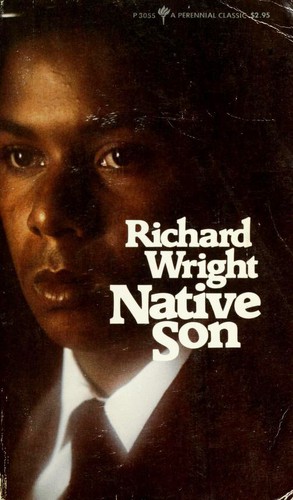
Talk to Native Son like its author wrote you back.
Get the ideas that fit your life — not generic summaries.
- Chat with the book
- Audiobook-style main ideas
- Adapts to your life and goals
- Helps you take action
Native Son, in detail
Richard Wright's 1940 novel opens on a rat. Bigger Thomas, a twenty-year-old Black man in Depression-era Chicago, kills a rat with a skillet in the one-room apartment he shares with his mother and siblings. It's the first of many killings in the book, and Wright intends the parallel to be uncomfortable. Bigger has been offered a job as chauffeur for the Dalton family, wealthy white liberals whose philanthropy and racism occupy the same easy conscience. What follows in Book One ("Fear") builds with cold inevitability toward an act of violence that destroys Bigger's life and the lives of people around him.
Wright's argument, developed most explicitly through the Communist lawyer Max's courtroom speech in Book Three, is that Bigger Thomas is not a monster but a product — that a society that denies a person humanity, education, aspiration, and safety should not be surprised when that person expresses himself through violence. This is a deliberately uncomfortable thesis, and Wright doesn't soften it. Bigger is not sympathetic in the conventional sense. He lies, he is cruel, he terrorizes people he claims to care about. Wright insists that understanding him is not the same as forgiving him.
The novel was the first book by a Black author to be a Book-of-the-Month Club main selection, and it sold 215,000 copies in three weeks — extraordinary for 1940. Its power comes from Wright's willingness to occupy Bigger's interiority without distancing himself, to show us the world as Bigger experiences it: a world of white faces and closed doors where his choices are constrained before he makes them. The prose is naturalist and deliberate, closer to Dreiser than to Hurston, and some sections feel padded — particularly Max's speech, which runs long.
This is a hard book. It is supposed to be. Readers who want to understand the rage that runs through twentieth-century Black American writing — and why Wright found Hurston's folk warmth politically inadequate — need to read this. Those who want comfort or redemption won't find it here, and that's the point.
The big ideas
- 1.
Wright argues that Bigger's violence is the logical outcome of a society that systematically denied him every other form of self-expression — this is not an exculpation but an indictment.
- 2.
The Dalton family's liberalism is treated as a form of blindness: their philanthropy coexists with owning the slums Bigger's family lives in. Wright is harsh on well-meaning white people.
- 3.
Bigger experiences a perverse sense of freedom after the killing — the act, however terrible, is the first choice he has made that no one else scripted for him.
