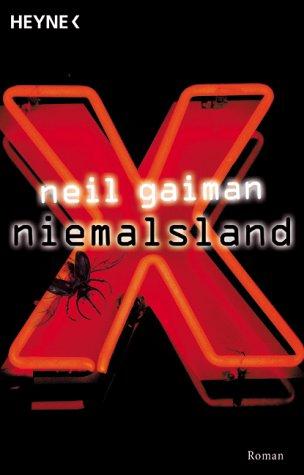
Talk to Neverwhere like its author wrote you back.
Get the ideas that fit your life — not generic summaries.
- Chat with the book
- Audiobook-style main ideas
- Adapts to your life and goals
- Helps you take action
Neverwhere, in detail
Neverwhere began as a BBC TV series in 1996 and was novelized by Gaiman in the same year. It follows Richard Mayhew, a perfectly ordinary Scotsman living in London who makes the mistake of stopping to help a girl bleeding on a pavement. In doing so he falls through the surface of London into London Below — the hidden city beneath the tube and the streets, populated by people who fell through the cracks of ordinary life, ancient powers, assassins who come in pairs, and the literal angel Islington.
The novel's central metaphor is homelessness and social invisibility. London Below is where people go when they stop being seen — when modern urban life processes them out, and they become ghosts in plain sight. Richard, having helped Door, is rendered invisible to everyone in his ordinary life: his fiancée, his colleagues, the street. He exists but is no longer perceived. To get his life back, he has to navigate a world that runs on entirely different rules than the one he knew.
Gaiman's London Below is one of the great fictional Londons — built from the real geography of tube stations, rivers, and markets, but reinterpreted as mythology. Black Friars are actual friars. The Earl's Court is a literal earl in a moving court on a tube train. The Night's Bridge is terrifying. The texture is dense and specific, and it rewards readers who know London geography without requiring it of anyone who doesn't.
The novel is lighter and faster than American Gods or Good Omens — it's closer to a thriller in pacing — and the moral is relatively clear. The book's two villains, Croup and Vandemar, are among the most effective comic-menacing antagonists in modern fantasy fiction. What Neverwhere does less well is character depth; Richard is a pleasantly ordinary man but not particularly interesting, and Door, the character whose story drives the plot, is given less interiority than she deserves. It's a fairy tale, and it works as one.
The big ideas
- 1.
Social invisibility is taken literally. The novel makes concrete what it means to be ignored by urban society — to exist but not to be seen — and uses that as its entry point.
- 2.
London Below is built from real London geography, with each element reinterpreted as living mythology. It is both a love letter to London and an indictment of the city's indifference to its failures.
- 3.
Croup and Vandemar are Gaiman at his most purely entertaining — elegant, malevolent, theatrical, and genuinely threatening all at once.
