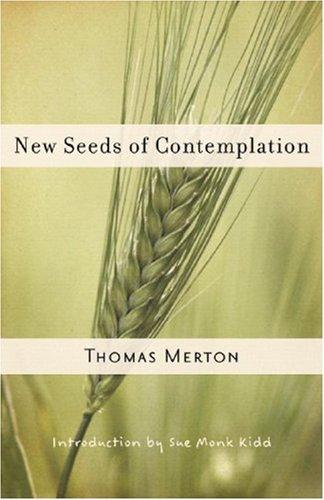
Talk to New Seeds of Contemplation like its author wrote you back.
Get the ideas that fit your life — not generic summaries.
- Chat with the book
- Audiobook-style main ideas
- Adapts to your life and goals
- Helps you take action
What it argues
New Seeds of Contemplation is Thomas Merton's revised and expanded version of Seeds of Contemplation, which he published in 1949 when he was still new to monastic life. The 1961 revision reflects a decade more of experience as a Trappist monk at the Abbey of Gethsemani in Kentucky, and the differences are significant: the earlier book was sometimes strident and doctrinally narrow; the revision is more generous, more psychologically precise, and more honest about the difficulty of what Merton is describing.
The book is organized as a series of short, meditative chapters on aspects of the contemplative life. Merton writes about what contemplation is and is not, the nature of the true self versus the false self (the ego constructed to navigate the social world), the relationship between solitude and community, the uses and limits of liturgy, and the danger of mistaking spiritual performance for spiritual depth. He is hard on religious complacency, including his own. The chapter on the false self is the book's most durable contribution: Merton argues that the self most people spend their lives defending — their reputation, their image, their social identity — is not a self at all but a mask that prevents encounter with the God who waits behind it.
What it gets right
- 1.
The false self is the identity constructed to navigate social life — reputation, role, image — and it is the primary obstacle to contemplative depth. Merton argues we spend most of our lives defending a self that does not ultimately exist.
- 2.
Contemplation is not a spiritual technique or a feeling. It is a direct, non-conceptual awareness of God that cannot be produced by effort but can be blocked by noise, distraction, and the need to perform.
- 3.
Solitude is not isolation. Merton insists that true solitude, which strips away the social self, is the ground for genuine love of others — not its enemy.
What it covers
Who wrote it
Thomas Merton (1915–1968) was an American Catholic monk, poet, and social critic who entered the Trappist Abbey of Gethsemani in Kentucky in 1941. His autobiography The Seven Storey Mountain, published in 1948, became an unexpected bestseller and brought thousands of readers to Christian monasticism. Over the following two decades he published more than sixty books on contemplation, social justice, nonviolence, and interfaith dialogue. He corresponded with figures including D.T. Suzuki, Thich Nhat Hanh, and the Dalai Lama. He died in Bangkok in 1968 while attending an interfaith conference.
