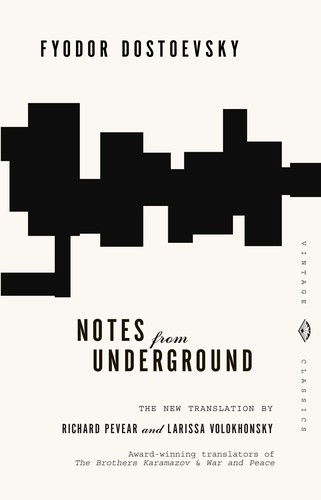
Talk to Notes from Underground like its author wrote you back.
Get the ideas that fit your life — not generic summaries.
- Chat with the book
- Audiobook-style main ideas
- Adapts to your life and goals
- Helps you take action
Notes from Underground, in detail
The Underground Man speaks directly to you from his damp St. Petersburg corner. He is forty, a retired civil servant, and by his own admission sick, spiteful, and unattractive. He says he will tell you the truth: that everything the rationalists and progressives promise — that human beings will act in their rational self-interest once properly educated, that social conditions explain human behavior, that a crystal palace of prosperity will eliminate suffering — is a lie. Because human beings, he insists, sometimes act against their own interest simply to prove they can. Freedom is the capacity to choose poorly and to enjoy it.
The first part of the novella is the manifesto: the Underground Man tearing apart utilitarian reason and the deterministic view of human nature with acid wit and genuine philosophical force. It is uncomfortable reading because it is often right. The second part is narrative: three scenes from twenty years earlier — a confrontation with an officer, a disastrous dinner with former schoolmates, a night with a young prostitute named Liza — that dramatize his theory in reverse. He is not the free spirit who escapes determinism; he is the most determined character imaginable, trapped by his own hyper-consciousness into the very paralysis he mocks.
What makes Notes from Underground important rather than merely clever is the self-awareness embedded in its structure. The Underground Man knows he is performing. He knows his spite is partly theater. He knows Liza's pity is genuine and that he is destroying it out of something he cannot quite name. The novella is simultaneously a refutation of progressive rationalism and a portrait of a man destroyed by the psychology that refuses progressive rationalism. Dostoevsky manages to have it both ways.
At under a hundred pages, this is the most efficient entry point into Dostoevsky's later themes. It is also the most modern-feeling of his works — the Underground Man's alienation, his compulsive self-analysis, his need to be seen and simultaneously to be left alone, reads less like nineteenth-century Russian literature than like the internal monologue of someone on a very bad internet day. Readers who find it cold or purely cerebral are reading it wrong: the Liza section is devastating precisely because it earns the feeling it refuses to let the character keep.
The big ideas
- 1.
The Underground Man's central claim is that humans sometimes act against rational self-interest simply to assert that they have a will — that freedom, not welfare, is the deepest human need.
- 2.
The crystal palace of progressive rationalism is Dostoevsky's target: a vision of human perfectibility that is insulting precisely because it reduces humans to predictable machines.
- 3.
Hyper-consciousness is its own trap: the more clearly you see your own motivations, the more paralyzed you become, and the Underground Man is the most paralyzed person in his own story.
