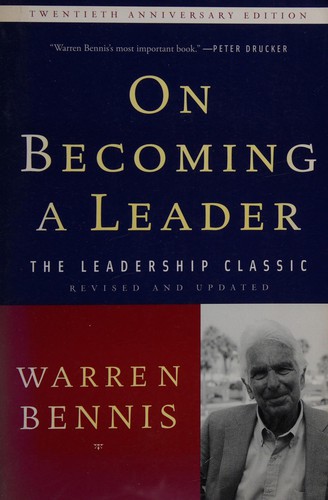
Talk to On Becoming a Leader like its author wrote you back.
Get the ideas that fit your life — not generic summaries.
- Chat with the book
- Audiobook-style main ideas
- Adapts to your life and goals
- Helps you take action
What it argues
On Becoming a Leader is Warren Bennis's argument that leadership is not a set of techniques to be mastered but a continuous process of self-discovery — and that the most important leadership development work is inner rather than outer. Written in 1989 and updated in subsequent editions, the book draws on extended interviews with ninety leaders across business, government, academia, and the arts. The through-line is that leadership emerges from knowing who you are, not from learning what leaders do.
Bennis makes a distinction that became influential: managers do things right; leaders do the right things. Managers optimize within given constraints; leaders question the constraints. He argues that most organizations over-manage and under-lead, producing organizations that are efficient at executing strategies that are wrong. The leader's role is to create a compelling vision of reality and build the social architecture that enables people to pursue it.
What it gets right
- 1.
Managers do things right; leaders do the right things. Leadership is about direction and purpose; management is about optimization within given constraints.
- 2.
Leadership cannot be taught from the outside. It emerges from self-knowledge — knowing your values, your strengths, your purpose, and your style.
- 3.
Experience alone doesn't develop leaders. Reflecting on experience and making meaning from it is what separates leaders who grow from those who plateau.
What it covers
Who wrote it
Warren Bennis (1925–2014) was a professor of business administration at the University of Southern California and a widely cited scholar and author on leadership. He wrote more than thirty books and contributed to the Harvard Business Review throughout his career. Bennis served as president of the University of Cincinnati and advised four US presidents, and his work helped establish leadership studies as a serious academic and practical field. On Becoming a Leader, his most widely read book, has been translated into more than twenty-one languages.
