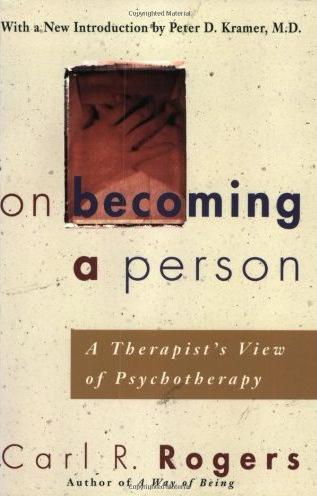
Talk to On Becoming a Person: A Therapist's View of Psychotherapy like its author wrote you back.
Get the ideas that fit your life — not generic summaries.
- Chat with the book
- Audiobook-style main ideas
- Adapts to your life and goals
- Helps you take action
On Becoming a Person: A Therapist's View of Psychotherapy, in detail
Carl Rogers wrote this book in 1961 as an attempt to communicate his therapeutic approach to readers outside the consulting room. Rogers was the founder of client-centered therapy, and the ideas here — that the therapist's unconditional positive regard, empathy, and congruence are the active ingredients of healing — were genuinely radical at the time. Freudian analysis was the dominant model; Rogers proposed that what mattered wasn't interpretation or technique but the quality of the relationship itself.
The book is assembled from lectures and papers Rogers gave throughout the 1950s, so it doesn't read as a linear argument. It circles similar themes from different angles: the conditions for therapeutic change, the nature of the fully functioning person, what it means to learn, how creativity emerges, and whether the sciences of behavior are compatible with human freedom. The writing is careful and personal. Rogers draws on case material from clients he worked with, and the examples ground abstract ideas in specific encounters.
The most lasting contribution is the framework Rogers calls the "necessary and sufficient conditions" for therapeutic change: the therapist must be genuine (congruent), must communicate empathic understanding, and must hold unconditional positive regard for the client. Rogers argued these conditions, when met, were enough — and that technique without them was useless. This challenged not just psychoanalysis but the behavioral models that were emerging at the same time.
On Becoming a Person is not a self-help manual and it's not a clinical textbook. It's a philosophical account of what it means to grow as a human being. It's most rewarding for readers willing to sit with ideas rather than extract action points. Therapists, educators, and anyone drawn to humanistic thought will find it rich. Readers looking for concrete behavioral strategies will find it frustrating.
The big ideas
- 1.
The therapeutic relationship matters more than technique. Unconditional positive regard, empathy, and congruence from the therapist are the active ingredients of change.
- 2.
Unconditional positive regard doesn't mean approval of everything. It means accepting the person as a whole without making that acceptance conditional on behavior.
- 3.
Congruence — being genuine rather than playing a professional role — is the first condition. A therapist who is performing empathy rather than experiencing it produces nothing.
