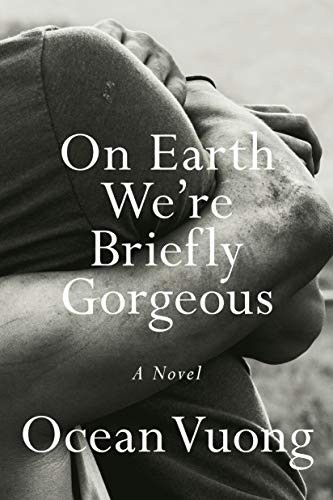
Talk to On Earth We're Briefly Gorgeous like its author wrote you back.
Get the ideas that fit your life — not generic summaries.
- Chat with the book
- Audiobook-style main ideas
- Adapts to your life and goals
- Helps you take action
On Earth We're Briefly Gorgeous, in detail
On Earth We're Briefly Gorgeous is structured as a letter from a young Vietnamese-American man, Little Dog, to his illiterate mother — a letter she will never be able to read. The conceit is not a gimmick; it establishes the book's central condition from the first page. Language is both the narrator's gift and the barrier between him and the woman he most loves. He can articulate his experience in English. She cannot receive it.
The novel moves across three overlapping territories: Little Dog's childhood in Hartford, Connecticut with his mother and grandmother — both women carrying trauma from the Vietnam War — his first love affair with a white boy named Trevor in rural Connecticut, and the wider history of American violence that threads through everything from Agent Orange to the opioid epidemic. These are not separate threads; the book weaves them together in a way that shows how violence travels across time, across bodies, across generations without needing to be named.
Vuong writes in a mode that is closer to poetry than to conventional fiction — dense, image-driven, willing to stop forward momentum for a paragraph of pure observation. This is his first novel, and it carries the sensibility of his acclaimed poetry collection Night Sky with Exit Wounds. The prose can be genuinely beautiful, and it can also feel mannered; the book operates at high emotional pitch throughout and does not modulate much. That intensity is both its power and its limitation.
Readers who love lyric prose, who are interested in queerness and immigration as lived experiences rather than political abstractions, and who can follow a narrative that moves by association rather than causation will find this extraordinary. Readers looking for story in a conventional sense may find the book feels more like an extended prose poem. Both descriptions are accurate. The question is which kind of reader you are.
The big ideas
- 1.
The novel shows how intergenerational trauma is transmitted through bodies and behavior rather than through explicit speech — the mother and grandmother carry the war without ever explaining it.
- 2.
Language is framed as both connection and exclusion: Little Dog can write, his mother cannot read English, and the book is organized around that unbridgeable gap.
- 3.
Queerness in the novel is inseparable from class, immigration, and vulnerability — it is never treated as an identity category in isolation.
