Talk to On Liberty like its author wrote you back.
Get the ideas that fit your life — not generic summaries.
- Chat with the book
- Audiobook-style main ideas
- Adapts to your life and goals
- Helps you take action
On Liberty, in detail
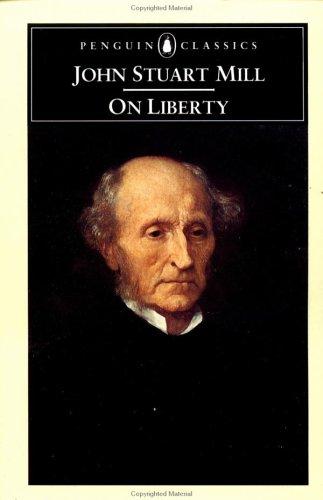
On Liberty, published in 1859, is John Stuart Mill's defense of individual freedom against both governmental coercion and social pressure. Mill begins with what he calls the "very simple principle" — also known as the harm principle — that the only legitimate reason for society to interfere with an individual's freedom of action is to prevent harm to others. Harm to oneself is not sufficient justification. This sounds simple, but Mill spends the rest of the essay mapping its implications across speech, conduct, and the relationship between individual development and collective welfare.
The chapter on freedom of thought and discussion is the most celebrated and is worth reading as a stand-alone argument. Mill makes four claims for why expression should be free even when it is false or offensive. First, the censored opinion might be true. Second, even if false, it likely contains a partial truth. Third, even if entirely false, free contestation prevents true beliefs from becoming dead dogmas — comfortable slogans that no one genuinely understands because they have never had to defend them. Fourth, and most practically, suppression of dissent tends to suppress the person doing the dissenting, not merely the idea.
Mill also argues for what he calls individuality — the development of one's distinctive capacities and character — as a good in itself, not merely instrumentally. A society that produces well-behaved conformists at the cost of individual originality is losing something essential. The argument here draws on Humboldt and anticipates later liberal thought about autonomy and self-creation.
The essay has real weaknesses. Mill's utilitarianism is in some tension with his defense of individual rights: he wants to ground liberty in general welfare, but individual freedom sometimes conflicts with majority welfare in ways the harm principle does not cleanly resolve. His applications of the principle to particular cases — education, marriage, trade regulation — are sometimes more tentative and inconsistent than the general argument suggests. And his explicitly paternalistic exceptions (civilized nations may act otherwise toward those not yet in the maturity of their faculties) are among the most contested passages in nineteenth-century political philosophy.
The big ideas
- 1.
The harm principle: society may only coerce individuals to prevent harm to others. Paternalistic interference to protect people from themselves is illegitimate.
- 2.
Freedom of thought and expression is defended on four grounds: the suppressed view may be true; it may contain partial truth; free contestation prevents true beliefs from becoming dead dogmas; and suppression harms the dissenter.
- 3.
Individuality — the development of one's distinctive capacities — is a social good, not merely a private one. Conformist societies lose the originality that drives progress.
