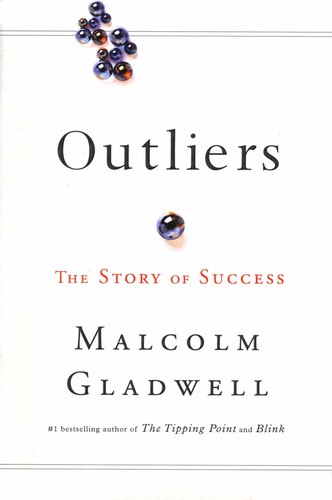
Talk to Outliers: The Story of Success like its author wrote you back.
Get the ideas that fit your life — not generic summaries.
- Chat with the book
- Audiobook-style main ideas
- Adapts to your life and goals
- Helps you take action
What it argues
Outliers is Malcolm Gladwell's argument that exceptional success is less a product of individual genius or drive than it is of hidden advantages, timing, and accumulated opportunity. The book opens with a disorienting observation: the majority of elite Canadian junior hockey players are born in January, February, or March. The reason is a cutoff date in youth leagues that makes children born early in the year older and physically larger than their peers, so they get more coaching attention, more ice time, and more chances to develop. What looks like natural talent is largely a head start that compounds over years.
Gladwell builds the argument through stories. Bill Gates had rare access to a time-sharing terminal in 1968, at exactly the age and moment needed to accumulate ten thousand hours of programming before almost anyone else in the world. The Beatles played Hamburg clubs eight hours a night for years before their breakthrough. Robert Oppenheimer escaped expulsion from Cambridge through social savvy that poorer students never develop. In each case, Gladwell is pointing at the same thing: exceptional performers didn't just work harder. They were positioned in environments that let practice accumulate into mastery at a rate others couldn't match.
What it gets right
- 1.
Hidden advantages compound. What looks like natural talent often traces back to a timing or circumstance advantage that allowed more practice, more mentorship, or more opportunity at a critical age.
- 2.
The ten-thousand-hour rule: reaching elite performance in any complex domain requires roughly ten thousand hours of deliberate practice. The rule is necessary but not sufficient.
- 3.
Birthdate effects shape entire cohorts. In age-cutoff systems — youth sports, school enrollment — children born just after the cutoff are persistently disadvantaged against older peers who appear more capable.
What it covers
Who wrote it
Malcolm Gladwell is a Canadian journalist and staff writer at The New Yorker, where he has worked since 1996. He is the author of five New York Times bestsellers: The Tipping Point, Blink, Outliers, David and Goliath, and Talking to Strangers. His work examines how social science research applies to everyday experience — why certain ideas spread, how snap judgments form, and what conditions produce exceptional achievement. He grew up in Ontario, Canada, and his long-form narrative journalism has shaped a generation of popular nonfiction.
