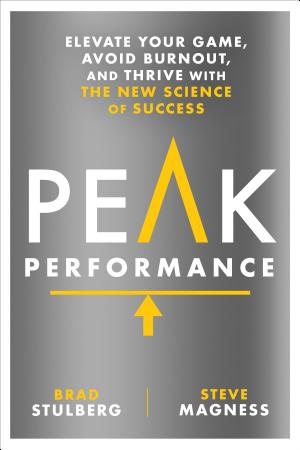
Talk to Peak Performance like its author wrote you back.
Get the ideas that fit your life — not generic summaries.
- Chat with the book
- Audiobook-style main ideas
- Adapts to your life and goals
- Helps you take action
What it argues
Peak Performance is Brad Stulberg and Steve Magness's synthesis of performance science across domains — athletics, science, art, and business. The book's unifying formula is simple: stress plus rest equals growth. Every adaptation the body and mind make — whether in muscle fiber, cognitive skill, or creative capacity — follows the same pattern of applying a challenge, recovering fully, and emerging stronger. The authors argue that most people misapply this insight in both directions: they apply chronic stress without sufficient recovery, or they avoid discomfort to the point of never generating the stimulus for growth.
The book covers several interconnected themes. Priming describes how physical and cognitive warmup routines affect performance quality. The minimum effective dose of stress is explored — enough to trigger adaptation, not so much that it causes breakdown. The authors discuss the difference between good and bad stress, the science of recovery (sleep, rest, doing nothing), and the role of purpose in sustaining effort over time. Research on elite performers in multiple fields shows consistent patterns: they practice in focused blocks, rest deliberately, and connect their work to something beyond personal achievement.
What it gets right
- 1.
The fundamental formula for growth is stress plus rest. Apply a challenging stimulus, recover fully, and emerge stronger. This applies equally to muscles, skills, and creative capacity.
- 2.
Most people either apply chronic stress without adequate recovery, or avoid discomfort entirely. Both strategies prevent growth.
- 3.
Purpose amplifies performance. People who connect difficult work to something larger than personal achievement show measurably greater endurance and output quality.
What it covers
Who wrote it
Brad Stulberg is a performance coach, journalist, and author who has written for publications including Outside, New York Magazine, and Forbes. He co-founded The Growth Equation with Steve Magness, a practice and newsletter focused on sustainable excellence in sport, work, and life. His subsequent books include The Passion Paradox and Master of Change. Steve Magness, his co-author on Peak Performance, is a performance scientist and coach who has worked with Olympic athletes and writes extensively on the physiology and psychology of endurance performance.
