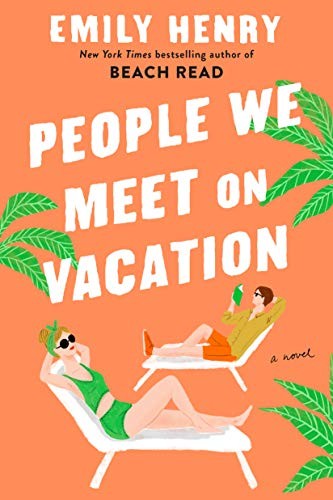
Talk to People We Meet on Vacation like its author wrote you back.
Get the ideas that fit your life — not generic summaries.
- Chat with the book
- Audiobook-style main ideas
- Adapts to your life and goals
- Helps you take action
People We Meet on Vacation, in detail
Alex and Poppy have been best friends for over a decade despite having almost nothing in common. Every summer they take a trip together — their one annual indulgence apart from their separate lives. Two years ago, something happened on their last trip that broke the friendship and neither has fully recovered. The novel alternates between present-day scenes of Poppy persuading a reluctant Alex to try one more trip and flashback chapters documenting their friendship year by year, building toward the event that ended it.
The dual timeline is Henry's most technically accomplished structural work. The flashback chapters aren't backstory in the conventional sense — they're the actual story, the one that explains everything the present-day scenes are trying to repair. Henry uses the alternation to create sustained dramatic irony: the reader sees Poppy and Alex falling toward something obvious from the outside while both characters treat it as impossible from the inside. The gap between what the reader knows and what the characters allow themselves to know is where all the tension lives.
The book is fundamentally about fear of change masquerading as contentment. Poppy travels constantly and presents herself as someone who doesn't want roots; Alex stays in his hometown and presents himself as someone who doesn't want more. Both of these are defensive postures, and the friendship holds them in place because they provide what the other person isn't getting elsewhere. The novel is honest about how close friendships can function as emotional substitutes — comfortable enough to prevent you from wanting more but insufficient to give you what you actually need.
Henry's plotting is tighter here than in Beach Read, and the emotional payoff is more earned. The moment the past timeline reveals what happened between them lands with appropriate weight because of the detail she's built around it. People We Meet on Vacation operates firmly in romance convention — you always know where it's going — but the way it gets there is specific and emotionally precise. Readers who find themselves resistant to the genre will still likely be absorbed.
The big ideas
- 1.
Poppy and Alex's friendship is a holding pattern — genuine, loving, and structured in a way that prevents either of them from having to want something more scary.
- 2.
The dual timeline creates dramatic irony that the novel depends on: the reader understands what happened between them before either character is willing to name it.
- 3.
Poppy's travel writing life and Alex's settled small-town life are opposites that mirror the same underlying fear — of wanting something too much to bear losing it.
