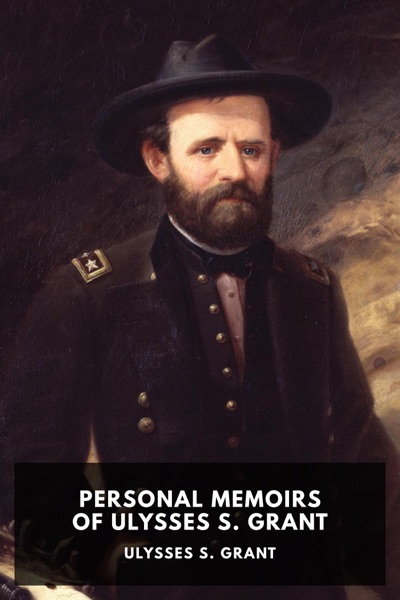
Talk to Personal Memoirs of Ulysses S. Grant like its author wrote you back.
Get the ideas that fit your life — not generic summaries.
- Chat with the book
- Audiobook-style main ideas
- Adapts to your life and goals
- Helps you take action
What it argues
Ulysses S. Grant wrote his memoirs while dying of throat cancer, dictating and correcting pages as his body failed, racing to finish before the money ran out and leave something for his family. He completed the manuscript four days before his death in 1885. Mark Twain, who published the book, called it the finest memoir produced by an American since Benjamin Franklin's. That assessment has held.
The memoirs cover Grant's childhood in Ohio, his years at West Point, his service in the Mexican-American War, his difficult years as a civilian in the 1850s, and then the Civil War in full — from his early campaigns in Missouri and Kentucky through Forts Henry and Donelson, Shiloh, Vicksburg, and finally the Virginia campaign against Lee that ended at Appomattox. The book closes at the surrender; Grant does not cover his presidency.
What it gets right
- 1.
Grant's prose style — direct, clear, without rhetorical padding — is the memoir's most discussed quality and was widely praised in his own time by writers including Mark Twain.
- 2.
The memoirs are notably generous to Confederate opponents, particularly Lee, whom Grant treats with respect throughout and describes at Appomattox with care.
- 3.
Grant is candid about his failures in the 1850s — the civilian years between the Mexican War and the Civil War when he struggled financially and personally.
What it covers
Who wrote it
Ulysses S. Grant was born in 1822 in Ohio, graduated from West Point in 1843, and served in the Mexican-American War before leaving the Army in 1854. After struggling financially for years he rejoined the military at the outbreak of the Civil War and rose to become General-in-Chief of the Union Army. He accepted Lee's surrender at Appomattox in 1865 and served two terms as the 18th President of the United States from 1869 to 1877. He was diagnosed with throat cancer in 1884 and completed his memoirs four days before his death on July 23, 1885. Mark Twain's publishing house published the book that same year.
