Personal Memoirs of Ulysses S. Grant by Ulysses S. Grant is a 1885 memoir book about leadership, civil war, military strategy. Grant's prose style — direct, clear, without rhetorical padding — is the memoir's most discussed quality and was widely praised in his own time by writers including Mark Twain.
Summary
Ulysses S. Grant wrote his memoirs while dying of throat cancer, dictating and correcting pages as his body failed, racing to finish before the money ran out and leave something for his family. He completed the manuscript four days before his death in 1885. Mark Twain, who published the book, called it the finest memoir produced by an American since Benjamin Franklin's. That assessment has held.
The memoirs cover Grant's childhood in Ohio, his years at West Point, his service in the Mexican-American War, his difficult years as a civilian in the 1850s, and then the Civil War in full — from his early campaigns in Missouri and Kentucky through Forts Henry and Donelson, Shiloh, Vicksburg, and finally the Virginia campaign against Lee that ended at Appomattox. The book closes at the surrender; Grant does not cover his presidency.
What makes it remarkable is the prose. Grant writes with a directness and clarity that military historians have studied for over a century. There is no rhetorical inflation, no self-pity, and almost no score-settling. He is generous to enemies and reserved in his praise of allies — Lee gets respect, Sherman gets genuine affection, McClellan gets damning understatement. His descriptions of battles are organized for comprehension rather than drama, which gives them a documentary authority that more literary accounts lack.
The book is long — nearly 300,000 words — and the Mexican-American War section, which Grant disapproved of, is a slog to get through. But the Civil War portion is among the best accounts of that conflict written by any participant. Grant's self-portrait is of a man who had limited imagination about his own capabilities until circumstances required them, who did not much enjoy war, and who understood that winning required outlasting the enemy in a way his predecessors had not.
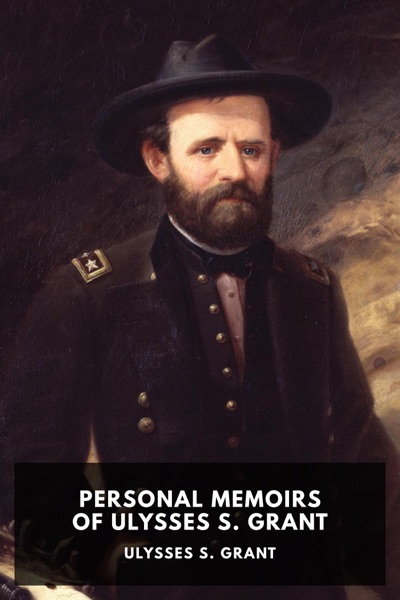
Talk to Personal Memoirs of Ulysses S. Grant like its author wrote you back.
Get the ideas that fit your life — not generic summaries.
- Chat with the book
- Audiobook-style main ideas
- Adapts to your life and goals
- Helps you take action
Key takeaways
- 1.
Grant's prose style — direct, clear, without rhetorical padding — is the memoir's most discussed quality and was widely praised in his own time by writers including Mark Twain.
- 2.
The memoirs are notably generous to Confederate opponents, particularly Lee, whom Grant treats with respect throughout and describes at Appomattox with care.
- 3.
Grant is candid about his failures in the 1850s — the civilian years between the Mexican War and the Civil War when he struggled financially and personally.
- 4.
His strategic thinking centered on relentless pressure, coordination across theaters, and willingness to absorb casualties that predecessors were not willing to accept.
- 5.
Vicksburg, which Grant considers one of his best campaigns, is covered in detail and illustrates his willingness to improvise when circumstances changed.
- 6.
Grant understood the relationship between logistics and strategy more clearly than most of his contemporaries and describes it without jargon.
- 7.
He was writing while in physical agony from cancer and under financial pressure, which gives the prose an urgency that purely retrospective memoir often lacks.
- 8.
The book was completed four days before Grant's death; the race to finish it is itself a story about character and obligation.
Discussion questions
Use these on your own, with a book club, or as chat starters in Superbook. Book club version, ready to copy or print →
- 1.
Mark Twain called these the finest American memoirs since Franklin's. Having read them, do you agree? What is the standard for that kind of assessment?
- 2.
Grant is notably generous to Lee and the Confederate cause while also making clear he believed the Union cause was right. How does he hold those two positions at once?
- 3.
His years of failure between the wars — farming, selling firewood, working at his father's leather goods store — seem to have formed something in him. What does the book suggest he took from that period?
- 4.
Grant's prose is praised for its clarity. Pick one battle description and read it closely. What specifically makes it work?
- 5.
He covers the Mexican-American War even though he privately considered it unjust. What does the decision to include it say about his sense of what a memoir owes to honesty?
- 6.
Grant was famously reluctant to discuss his own heroism. Is that reticence real, or is it its own kind of self-presentation?
- 7.
The memoirs stop at Appomattox and don't cover the presidency. Is that the right decision? What would be lost or gained if he had included it?
- 8.
Shiloh, where Grant was surprised and nearly defeated, is covered with characteristic directness. How does he account for that near-disaster?
- 9.
Grant argues that the Civil War was inevitable given the political trajectory of the preceding decades. Does the book support that argument, or does it suggest that individual decisions mattered more than structural forces?
- 10.
He was dying when he wrote this. Does knowing that change how you read the book's tone — the absence of bitterness, the generosity to opponents?
- 11.
Which of Grant's strategic principles — if any — translate to leadership outside of military contexts?
Themes
Frequently asked questions
-
Are Grant's memoirs worth reading in full?
The Civil War portion is essential for anyone seriously interested in the war or in leadership under pressure. The Mexican-American War chapters are slower but Grant's moral discomfort with that conflict makes them worthwhile. The full book rewards the investment.
-
How long is the book?
Around 600-700 pages in most editions, roughly 19 to 20 hours of reading. Many readers read the Civil War portion selectively, which cuts that to around 12 hours.
-
Why did Grant write his memoirs?
Financial necessity combined with duty to his family. He had been defrauded in a business investment and was nearly broke when cancer struck. Writing the memoirs was a race to produce income before he died, with Mark Twain's publishing house covering the advance.
-
Is the prose actually as good as people say?
Yes. Grant's writing is clear, precise, and unadorned in a way that military and political memoir rarely achieves. Several literary critics and historians have identified it as among the best American prose of the nineteenth century.
-
Does Grant cover Reconstruction or his presidency?
No. The memoirs end at Appomattox. He explicitly chose not to cover his presidency, and he died before he could have reconsidered that decision.
Similar books
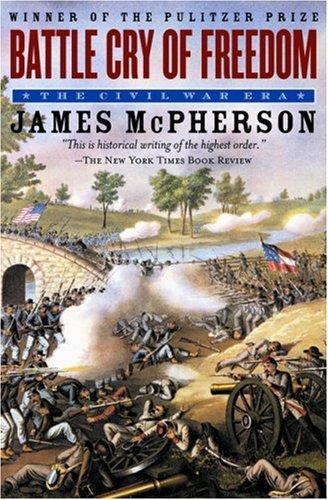
Battle Cry of Freedom: The Civil War Era
James M. McPherson
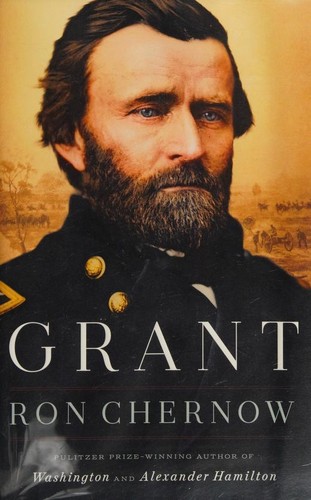
Grant
Ron Chernow
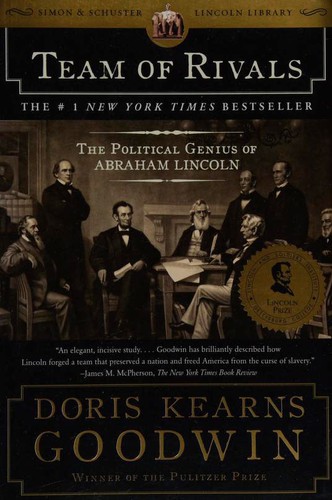
Team of Rivals: The Political Genius of Abraham Lincoln
Doris Kearns Goodwin
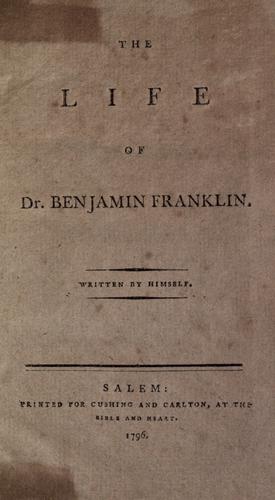
The Autobiography of Benjamin Franklin
Benjamin Franklin
