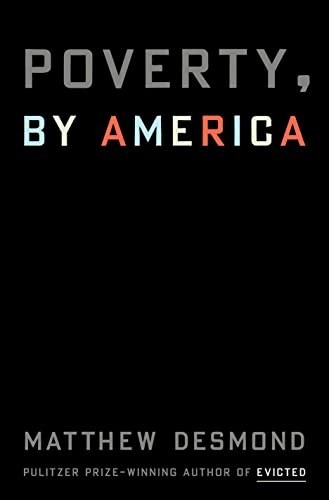
Talk to Poverty, by America like its author wrote you back.
Get the ideas that fit your life — not generic summaries.
- Chat with the book
- Audiobook-style main ideas
- Adapts to your life and goals
- Helps you take action
Poverty, by America, in detail
Poverty, by America is Matthew Desmond's follow-up to Evicted, and it makes a more explicit and polemical argument: poverty in the United States is not a natural condition or a problem of insufficient resources. It is actively maintained by the choices of non-poor Americans who benefit from it. Desmond calls the wealthy and middle class not just indifferent bystanders but participants in a system of exploitation, and he wants readers to reckon with their own position in that system.
The book organizes the argument around three mechanisms of exploitation. First, employers exploit poor workers through low wages and unpredictable schedules, enabled by weak labor law and the destruction of unions. Second, banks and landlords exploit poor consumers through predatory lending, high-fee financial products, and the same extractive rental market Desmond documented in Evicted. Third, wealthy and upper-middle-class households benefit from government subsidies — primarily the mortgage interest deduction, retirement account tax breaks, and capital gains treatment — that dwarf spending on means-tested programs for the poor.
The tone is different from Evicted. Where that book let the evidence accumulate into an argument, this one states the argument upfront and marshals evidence for it. Desmond frames the reader directly: if you own a home, hold a retirement account, or shop at stores that pay poverty wages, you are part of the system. That framing has drawn both admiration and criticism — some find it clarifying, others find it more moralistic than analytical.
The prescription is not narrowly technical. Desmond wants readers to become "poverty abolitionists" — to push for higher minimum wages, stronger unions, reformed tax policy, and better social housing. The final chapter is the most openly political section of any of his work. Whether it changes minds or preaches to the converted may depend on what the reader brings to it.
The big ideas
- 1.
Poverty in America is not natural or inevitable: it is actively produced and maintained by policy choices and private behavior that other Americans could change.
- 2.
The hidden welfare state for the affluent — mortgage interest deductions, retirement tax breaks, capital gains preferences — costs far more than programs for the poor.
- 3.
Low wages are not a market outcome but a political one: weak unions, labor law that favors employers, and sub-minimum wages for tipped workers are choices, not inevitabilities.
