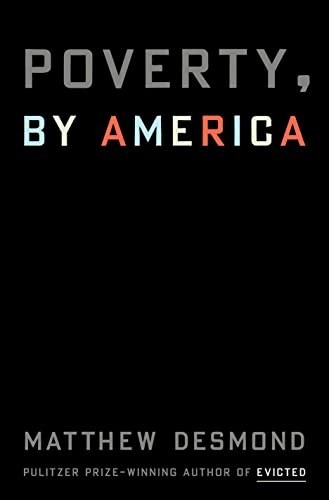
Poverty, by America by Matthew Desmond is a 2023 economics book about poverty, inequality, exploitation. Poverty in America is not natural or inevitable: it is actively produced and maintained by policy choices and private behavior that other Americans could change.
Summary
Poverty, by America is Matthew Desmond's follow-up to Evicted, and it makes a more explicit and polemical argument: poverty in the United States is not a natural condition or a problem of insufficient resources. It is actively maintained by the choices of non-poor Americans who benefit from it. Desmond calls the wealthy and middle class not just indifferent bystanders but participants in a system of exploitation, and he wants readers to reckon with their own position in that system.
The book organizes the argument around three mechanisms of exploitation. First, employers exploit poor workers through low wages and unpredictable schedules, enabled by weak labor law and the destruction of unions. Second, banks and landlords exploit poor consumers through predatory lending, high-fee financial products, and the same extractive rental market Desmond documented in Evicted. Third, wealthy and upper-middle-class households benefit from government subsidies — primarily the mortgage interest deduction, retirement account tax breaks, and capital gains treatment — that dwarf spending on means-tested programs for the poor.
The tone is different from Evicted. Where that book let the evidence accumulate into an argument, this one states the argument upfront and marshals evidence for it. Desmond frames the reader directly: if you own a home, hold a retirement account, or shop at stores that pay poverty wages, you are part of the system. That framing has drawn both admiration and criticism — some find it clarifying, others find it more moralistic than analytical.
The prescription is not narrowly technical. Desmond wants readers to become "poverty abolitionists" — to push for higher minimum wages, stronger unions, reformed tax policy, and better social housing. The final chapter is the most openly political section of any of his work. Whether it changes minds or preaches to the converted may depend on what the reader brings to it.
Talk to Poverty, by America like its author wrote you back.
Get the ideas that fit your life — not generic summaries.
- Chat with the book
- Audiobook-style main ideas
- Adapts to your life and goals
- Helps you take action
Key takeaways
- 1.
Poverty in America is not natural or inevitable: it is actively produced and maintained by policy choices and private behavior that other Americans could change.
- 2.
The hidden welfare state for the affluent — mortgage interest deductions, retirement tax breaks, capital gains preferences — costs far more than programs for the poor.
- 3.
Low wages are not a market outcome but a political one: weak unions, labor law that favors employers, and sub-minimum wages for tipped workers are choices, not inevitabilities.
- 4.
Banks and financial services companies earn enormous profits from the poor through check-cashing fees, payday loans, and predatory financial products aimed at those with no alternatives.
- 5.
Racial wealth inequality is sustained not only by historic discrimination but by ongoing policies — redlining's legacy, discriminatory lending, unequal school funding — that continue to compound.
- 6.
The mortgage interest deduction and similar tax expenditures redistribute money upward: homeowners earning over $100,000 receive the vast majority of the benefit.
- 7.
Shopping at low-wage employers and investing in companies that suppress wages are forms of participation in the system that produces poverty, even if they feel passive.
- 8.
Desmond argues that sustained civic pressure — becoming a poverty abolitionist — is more likely to produce change than individual charitable giving.
Discussion questions
Use these on your own, with a book club, or as chat starters in Superbook. Book club version, ready to copy or print →
- 1.
Desmond says non-poor Americans are not just indifferent to poverty but complicit in it. Does that framing change how you think about your own position in the economy?
- 2.
He argues that the hidden welfare state for the affluent is larger than means-tested programs for the poor. Is that comparison persuasive? Does it matter how you count it?
- 3.
Which of the three exploitation mechanisms — employer, landlord, or bank — feels most responsible to you for the persistence of poverty? Why?
- 4.
The book's tone is more polemical than Evicted. Does the shift make the argument more or less convincing to you?
- 5.
If poverty is maintained by the choices of non-poor Americans, which choice would be hardest to change? Which would be easiest?
- 6.
Desmond asks readers to become 'poverty abolitionists.' What would that actually look like in a life like yours?
- 7.
The mortgage interest deduction is politically almost untouchable. What does that tell us about the relationship between democratic politics and poverty policy?
- 8.
Desmond frames the reader as part of the system. Did that approach make you more receptive to his argument or more defensive? Why?
- 9.
How does Poverty, by America change or extend the argument Desmond made in Evicted? Does reading one help or require reading the other?
- 10.
His prescription includes stronger unions and higher minimum wages. Which opposition to those policies do you find most intellectually serious?
- 11.
If poverty is a political choice, why do politicians in the world's wealthiest country continue to make it?
Themes
Frequently asked questions
-
What is Poverty, by America about?
It argues that poverty in the United States is maintained by choices — in policy, labor markets, and private behavior — made by non-poor Americans who benefit from it. Desmond targets not individual villains but systemic arrangements that collectively keep roughly 38 million Americans in poverty.
-
Do I need to read Evicted first?
No, but the books reward being read together. Evicted provides the granular human evidence; Poverty, by America provides the political economy framework. Each works as a standalone, but each is stronger with the other as context.
-
Is Poverty, by America worth reading?
Yes, particularly for readers who finished Evicted and wanted Desmond to go further with the policy argument. It is shorter and more direct. Some critics find it too polemical; others find the directness necessary. The evidence base is solid even when the tone is pointed.
-
Who should read this book?
Anyone who wants to understand why the wealthiest country in the world maintains high rates of poverty. Especially useful for readers interested in tax policy, labor law, or housing — and for anyone who wants to do more than feel bad about poverty.
-
How long is Poverty, by America?
Around 240 pages, roughly four hours at average reading pace. It is significantly shorter and more argumentative than Evicted. The notes and sources are extensive and worth reading separately for the underlying research.
Similar books
Evicted: Poverty and Profit in the American City
Matthew Desmond
Caste: The Origins of Our Discontents
Isabel Wilkerson
The New Jim Crow: Mass Incarceration in the Age of Colorblindness
Michelle Alexander
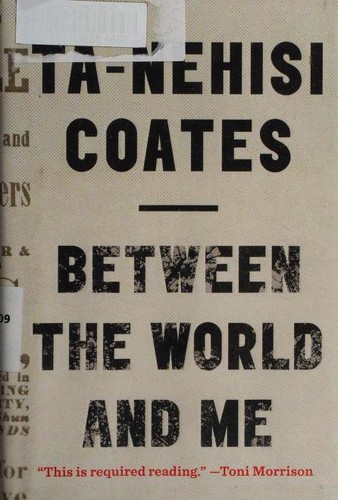
Between the World and Me
Ta-Nehisi Coates
