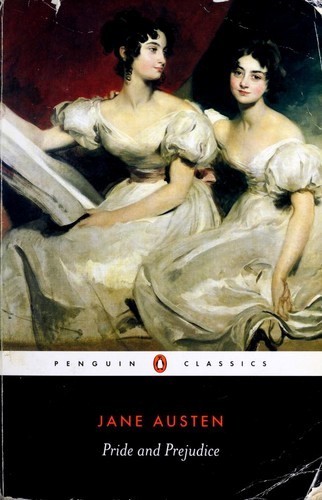
Talk to Pride and Prejudice like its author wrote you back.
Get the ideas that fit your life — not generic summaries.
- Chat with the book
- Audiobook-style main ideas
- Adapts to your life and goals
- Helps you take action
What it argues
Pride and Prejudice opens with one of the most famous sentences in English literature and immediately establishes its ironic mode: a truth universally acknowledged turns out to be a social pressure universally imposed. Elizabeth Bennet, the second of five daughters in a genteel but cash-poor family, is navigating a world where a good marriage is the only reliable form of economic security. When the wealthy Mr. Bingley arrives nearby with his even wealthier friend Mr. Darcy, the Bennet household tips into barely contained excitement. Darcy and Elizabeth meet, antagonize each other, and the novel's central machinery clicks into motion.
What Austen is actually writing about is the cost of self-deception. Both title vices belong to both leads: Darcy's pride makes him contemptuous of social inferiors, and Elizabeth's prejudice makes her willfully misread him based on a first impression she finds satisfying. The novel dismantles both. It does this through a plot that is ostensibly about courtship but is really about the discipline required to revise your own judgment — to notice when you've been wrong and admit it, which is harder than it sounds when your ego is involved. The surrounding cast — Mrs. Bennet's calculated hysteria, Mr. Collins's oblivious pomposity, Wickham's practiced charm — are less comic relief than they are cautionary mirrors.
What it gets right
- 1.
First impressions are unreliable, and the novel dramatizes the specific costs of clinging to them when evidence accumulates against them.
- 2.
Pride and prejudice are not opposites — both are forms of self-protective distortion. The novel argues that clear-eyed self-knowledge is more valuable and harder than it looks.
- 3.
Marriage in Austen's world is an economic contract wearing emotional clothes. Elizabeth's refusal of Collins is not whimsy — it's a gamble on her own future.
What it covers
Who wrote it
Jane Austen (1775–1817) was an English novelist whose six completed novels — Sense and Sensibility, Pride and Prejudice, Mansfield Park, Emma, Northanger Abbey, and Persuasion — have never gone out of print. Working with limited formal education and largely in secret, she developed a narrative voice of extraordinary ironic precision. Pride and Prejudice, her most widely read work, was published in 1813. She died at forty-one, and her novels were published anonymously during her lifetime.
