Talk to Primal Leadership like its author wrote you back.
Get the ideas that fit your life — not generic summaries.
- Chat with the book
- Audiobook-style main ideas
- Adapts to your life and goals
- Helps you take action
Primal Leadership, in detail
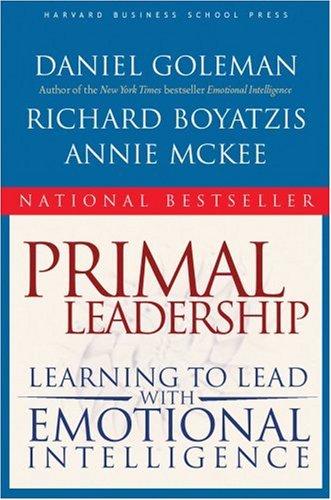
Primal Leadership is the application of emotional intelligence to organizational leadership, written by Daniel Goleman with Richard Boyatzis and Annie McKee. The central argument is that a leader's emotional state is literally contagious — it spreads through teams and organizations through a neurological process the authors call emotional contagion — and that this makes emotional intelligence not a soft skill but a primary driver of organizational performance.
The "primal" in the title refers to this biological priority. Before any other leadership task, a leader's emotional impact on the people around them sets the context for everything else that happens. A leader who creates a climate of anxiety produces anxious decisions. A leader who creates warmth and clarity produces engaged, creative work. The leader's emotional reality is the organizational climate, and that climate predicts performance across teams.
The book identifies six leadership styles — visionary, coaching, affiliative, democratic, pacesetting, and commanding — and maps each to the emotional climate it tends to create. The resonant styles (visionary, coaching, affiliative, democratic) generally produce positive climates; the dissonant styles (pacesetting, commanding) produce results in the short run but corrode engagement and performance over time. The practical prescription is that effective leaders develop range across styles and select the right one for the situation.
The second half focuses on intentional development: how leaders can identify and close the gaps in their emotional intelligence through a process of genuine self-awareness, feedback, and deliberate practice. The authors draw on Boyatzis's Intentional Change Theory, which describes how lasting behavioral change requires starting with a compelling vision of an ideal future self rather than with a list of deficits to correct.
The big ideas
- 1.
The leader's emotional state spreads through the organization through emotional contagion — a neurological process that makes leadership emotional climate the most powerful determinant of organizational performance.
- 2.
Six leadership styles vary in their emotional impact: visionary, coaching, affiliative, and democratic are generally resonant; pacesetting and commanding produce short-term results at the cost of long-term climate.
- 3.
Resonant leaders are in tune with both their own emotional states and those of the people around them. Dissonant leaders are out of sync with the emotional reality of their organizations.
