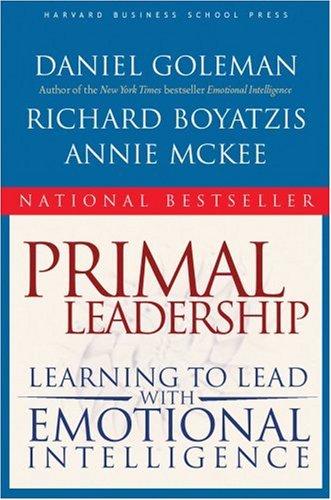
Primal Leadership by Daniel Goleman, Richard Boyatzis, and Annie McKee is a 2002 business book about leadership, emotional intelligence, organizational climate. The leader's emotional state spreads through the organization through emotional contagion — a neurological process that makes leadership emotional climate the most powerful determinant of organizational performance.
Summary
Primal Leadership is the application of emotional intelligence to organizational leadership, written by Daniel Goleman with Richard Boyatzis and Annie McKee. The central argument is that a leader's emotional state is literally contagious — it spreads through teams and organizations through a neurological process the authors call emotional contagion — and that this makes emotional intelligence not a soft skill but a primary driver of organizational performance.
The "primal" in the title refers to this biological priority. Before any other leadership task, a leader's emotional impact on the people around them sets the context for everything else that happens. A leader who creates a climate of anxiety produces anxious decisions. A leader who creates warmth and clarity produces engaged, creative work. The leader's emotional reality is the organizational climate, and that climate predicts performance across teams.
The book identifies six leadership styles — visionary, coaching, affiliative, democratic, pacesetting, and commanding — and maps each to the emotional climate it tends to create. The resonant styles (visionary, coaching, affiliative, democratic) generally produce positive climates; the dissonant styles (pacesetting, commanding) produce results in the short run but corrode engagement and performance over time. The practical prescription is that effective leaders develop range across styles and select the right one for the situation.
The second half focuses on intentional development: how leaders can identify and close the gaps in their emotional intelligence through a process of genuine self-awareness, feedback, and deliberate practice. The authors draw on Boyatzis's Intentional Change Theory, which describes how lasting behavioral change requires starting with a compelling vision of an ideal future self rather than with a list of deficits to correct.
Talk to Primal Leadership like its author wrote you back.
Get the ideas that fit your life — not generic summaries.
- Chat with the book
- Audiobook-style main ideas
- Adapts to your life and goals
- Helps you take action
Key takeaways
- 1.
The leader's emotional state spreads through the organization through emotional contagion — a neurological process that makes leadership emotional climate the most powerful determinant of organizational performance.
- 2.
Six leadership styles vary in their emotional impact: visionary, coaching, affiliative, and democratic are generally resonant; pacesetting and commanding produce short-term results at the cost of long-term climate.
- 3.
Resonant leaders are in tune with both their own emotional states and those of the people around them. Dissonant leaders are out of sync with the emotional reality of their organizations.
- 4.
Effective leaders develop a repertoire of styles and shift fluidly between them based on the situation. Over-reliance on any single style — even a resonant one — reduces impact.
- 5.
The pacesetting style is particularly dangerous because it feels like high standards but actually signals 'I don't trust you to manage the pace yourselves.' It suppresses initiative over time.
- 6.
Intentional change requires a compelling positive vision of a desired future, not just awareness of deficits. Change driven by what's wrong produces defensiveness; change driven by possibility produces motivation.
- 7.
The Positive Emotional Attractor (PEA) and Negative Emotional Attractor (NEA) are different neural states. Development work must activate the PEA to be sustainable — which means starting with strengths and aspirations, not weaknesses.
- 8.
Coaching is the most powerful developmental leadership style and the most underpracticed. Leaders who invest time in genuine coaching conversations produce better results over time than those who focus only on task performance.
Discussion questions
Use these on your own, with a book club, or as chat starters in Superbook. Book club version, ready to copy or print →
- 1.
Which of the six leadership styles do you use most naturally? Which do you use least? What's the cost of that imbalance?
- 2.
Think about a specific leader you've worked for whose emotional climate was highly positive. What did they do differently from leaders who created anxiety or flatness?
- 3.
Goleman argues that the pacesetting style suppresses initiative over time despite feeling like high standards. Do you agree? Where have you seen the cost of a pacesetting culture?
- 4.
When was the last time you led a development conversation with a direct report that was genuinely coaching rather than advice-giving or performance management?
- 5.
What's the emotional climate your team operates in on a typical week? How much of that climate do you create versus how much is context you've inherited?
- 6.
The book argues that lasting change requires starting with a vision of who you want to become, not a list of what's wrong. How does this apply to the development conversations you have with your team?
- 7.
What feedback have you received about the emotional climate you create? Did you agree with it? What did you do with it?
- 8.
Which leadership style do you reach for under pressure or stress? Is that the most effective choice for those situations?
- 9.
The commanding style is useful in a genuine crisis and corrosive when used habitually. What counts as a genuine crisis in your work? How often do you invoke it when it's not?
- 10.
Boyatzis's Intentional Change Theory says development must start with a compelling desired self. If you could describe your ideal leader self in specific behavioral terms, what would it look like?
- 11.
What does resonance actually feel like from inside the team — how do you know when a leader is resonant rather than just nice?
Themes
Frequently asked questions
-
Is Primal Leadership worth reading if I've already read Emotional Intelligence?
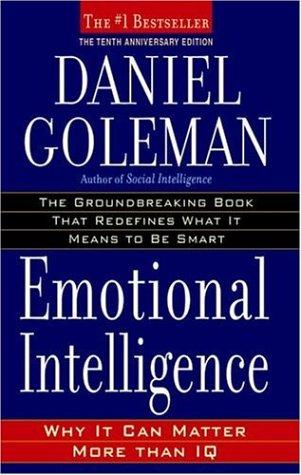
Yes. Emotional Intelligence is broader; Primal Leadership applies the framework specifically to organizational leadership and adds the six leadership styles model and the Intentional Change Theory. The styles framework alone makes it worth reading for anyone in a leadership role.
-
How long does it take to read Primal Leadership?
About five hours for the 306-page book. The first third (the argument about climate and emotional contagion) is the densest; the styles chapter is the most immediately applicable.
-
What is the most dangerous leadership style?
Goleman, Boyatzis, and McKee identify pacesetting as the style most likely to be used by high performers who don't realize they're damaging their teams. It feels like leadership through excellence but reads to teams as 'you're never good enough,' which eventually suppresses initiative and creates disengagement.
-
Who should read Primal Leadership?
Leaders who want to understand how their emotional states affect the people around them, managers who've received feedback about their management style and want a framework for understanding what's happening, and HR professionals designing leadership development programs.
-
What's the most actionable idea in the book?
Audit your leadership style repertoire. Name the six styles, identify which you use and which you avoid, and identify a situation in the coming week where a style you rarely use would produce better results than your default. The repertoire idea gives you something specific to practice.