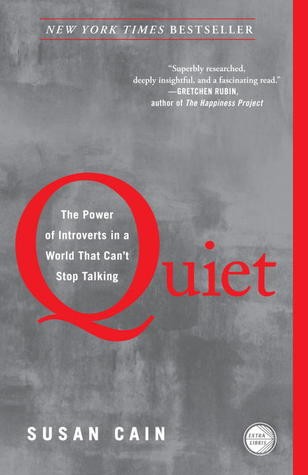
Talk to Quiet: The Power of Introverts in a World That Can't Stop Talking like its author wrote you back.
Get the ideas that fit your life — not generic summaries.
- Chat with the book
- Audiobook-style main ideas
- Adapts to your life and goals
- Helps you take action
Quiet: The Power of Introverts in a World That Can't Stop Talking, in detail
Quiet is Susan Cain's argument that Western culture — and American culture in particular — has built itself around an "Extrovert Ideal" that systematically undervalues roughly a third to a half of the population. The introvert, in this telling, is not a shy misfit who needs to come out of their shell. They are someone with a fundamentally different relationship to stimulation, solitude, and social energy, and that difference is largely innate, deeply rooted in neuroscience, and genuinely valuable in ways the culture has been slow to recognize.
The book moves across several registers. Cain opens with a historical argument: the shift from a "Culture of Character" to a "Culture of Personality" in the early twentieth century elevated salesmanship, charisma, and gregariousness over substance and inner life. She traces this shift through the rise of Dale Carnegie, the self-help industry, and the modern business school, where group brainstorming and open-plan offices are taken as signals of collaborative virtue even when the research on their effectiveness is mixed at best. The book's science sections draw on temperament research — particularly Jerome Kagan's longitudinal studies of high-reactive infants who became cautious, conscientious children — and on the work of Elaine Aron on high sensitivity. Cain is careful to distinguish introversion (a preference for lower stimulation environments) from shyness (fear of negative judgment), though in practice she acknowledges many introverts experience both.
The second half turns practical. Cain looks at how introverts navigate workplaces designed for extroverts, why the best leaders are sometimes the quietest, how Asian-American students in particular are penalized by a culture that conflates speaking loudly with thinking clearly, and how introverted parents can raise introverted children without pathologizing who they are. She introduces the idea of a "restorative niche" — the intentional retreat that allows introverts to recover after social performance — and the observation that many effective introverts learn to act out of character when the goal matters, without abandoning their core temperament.
The book is most persuasive when Cain is working from research rather than anecdote, and it is at its weakest when the introvert-extrovert binary does too much explanatory work. Human personality is more dimensional than any two-pole model captures, and readers who identify as ambiverts may find the categories frustrating. Still, as a corrective to a culture that conflates talkativeness with intelligence and solitude with failure, Quiet makes a case that holds up more than a decade after publication.
The big ideas
- 1.
The Extrovert Ideal — the cultural assumption that the ideal person is gregarious, assertive, and comfortable in the spotlight — shapes schools, workplaces, and social norms in ways that systematically disadvantage introverts.
- 2.
Introversion and extroversion are largely temperamental, rooted in different baseline responses to stimulation. Introverts are not broken extroverts; they are differently wired.
- 3.
High-reactive infants — those who respond intensely to novelty and stimulation — are more likely to become introverted, cautious, conscientious adults, according to Jerome Kagan's research.
