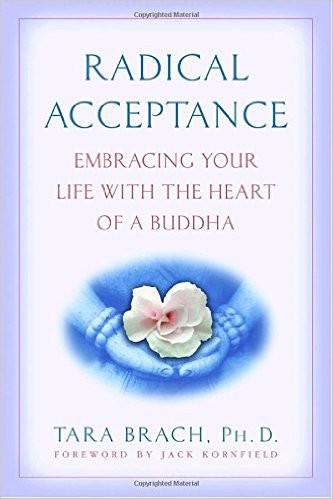
Talk to Radical Acceptance like its author wrote you back.
Get the ideas that fit your life — not generic summaries.
- Chat with the book
- Audiobook-style main ideas
- Adapts to your life and goals
- Helps you take action
What it argues
Tara Brach, a psychologist and Buddhist meditation teacher, wrote Radical Acceptance as a response to what she calls the trance of unworthiness — the pervasive background feeling that something is fundamentally wrong with us, that we are not enough. Drawing on Buddhist teachings, clinical psychology, and her own practice and teaching experience, Brach argues that most human suffering is sustained not by difficult circumstances but by the habitual ways we contract against and resist our own experience: judging, numbing, pushing away what we don't want to feel.
The book's central concept is in its title. Radical acceptance is the practice of meeting whatever arises in experience — pain, shame, anger, longing — with full acknowledgment rather than resistance. Brach distinguishes this from resignation or passivity: accepting what is true in this moment does not mean approving of it or giving up the capacity to change. What it does mean is pausing the automatic cycle of self-criticism and avoidance long enough to actually perceive what's present. From that contact, she argues, genuine choice becomes possible.
What it gets right
- 1.
The 'trance of unworthiness' — the chronic background sense that something is fundamentally wrong with us — drives much of human suffering and compulsive behavior.
- 2.
Radical acceptance is the practice of meeting experience fully without resistance or judgment, in each moment. It is distinct from approval or passive resignation.
- 3.
The RAIN practice (Recognize, Allow, Investigate, Nourish) provides a structured way to work with difficult emotions rather than avoiding or amplifying them.
What it covers
Who wrote it
Tara Brach is an American psychologist and Buddhist meditation teacher based in the Washington DC area. She holds a doctorate in clinical psychology from Saybrook Institute and has taught insight meditation since 1975. She founded the Insight Meditation Community of Washington and teaches at Spirit Rock Meditation Center. In addition to Radical Acceptance, she is the author of True Refuge and Trusting the Gold, and produces the widely listened-to Tara Brach Podcast, which features weekly guided meditations and dharma talks drawing on both Western psychology and Theravada Buddhist practice.
