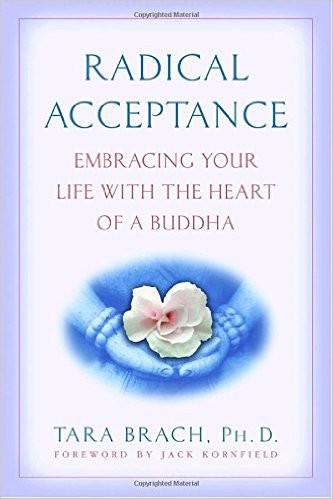
Talk to Radical Acceptance like its author wrote you back.
Get the ideas that fit your life — not generic summaries.
- Chat with the book
- Audiobook-style main ideas
- Adapts to your life and goals
- Helps you take action
Radical Acceptance, in detail
Tara Brach, a psychologist and Buddhist meditation teacher, wrote Radical Acceptance as a response to what she calls the trance of unworthiness — the pervasive background feeling that something is fundamentally wrong with us, that we are not enough. Drawing on Buddhist teachings, clinical psychology, and her own practice and teaching experience, Brach argues that most human suffering is sustained not by difficult circumstances but by the habitual ways we contract against and resist our own experience: judging, numbing, pushing away what we don't want to feel.
The book's central concept is in its title. Radical acceptance is the practice of meeting whatever arises in experience — pain, shame, anger, longing — with full acknowledgment rather than resistance. Brach distinguishes this from resignation or passivity: accepting what is true in this moment does not mean approving of it or giving up the capacity to change. What it does mean is pausing the automatic cycle of self-criticism and avoidance long enough to actually perceive what's present. From that contact, she argues, genuine choice becomes possible.
Brach structures much of the book around a practice she calls RAIN: Recognize what is happening, Allow the experience to exist, Investigate with gentle attention, and Nourish with self-compassion. The acronym gives readers a portable, step-by-step approach to working with difficult emotions in real time. Each phase of RAIN is illustrated with case studies from her therapy practice — clients dealing with addiction, grief, chronic illness, relational conflict, and childhood trauma — and with stories from Buddhist tradition.
The prose is gentler and more devotional than typical self-help writing. Brach writes with genuine warmth, and the clinical vignettes are handled with care. The book is most useful for readers already drawn to contemplative practice or struggling with self-criticism, shame, or the aftermath of trauma. It is less useful as an entry point to Buddhism or as a standalone mental health resource for severe conditions. For the specific problem it addresses — the internalized judge that makes ordinary living harder than it needs to be — Radical Acceptance offers a thoughtful and practically grounded response.
The big ideas
- 1.
The 'trance of unworthiness' — the chronic background sense that something is fundamentally wrong with us — drives much of human suffering and compulsive behavior.
- 2.
Radical acceptance is the practice of meeting experience fully without resistance or judgment, in each moment. It is distinct from approval or passive resignation.
- 3.
The RAIN practice (Recognize, Allow, Investigate, Nourish) provides a structured way to work with difficult emotions rather than avoiding or amplifying them.
