Talk to Radical Candor like its author wrote you back.
Get the ideas that fit your life — not generic summaries.
- Chat with the book
- Audiobook-style main ideas
- Adapts to your life and goals
- Helps you take action
Radical Candor, in detail
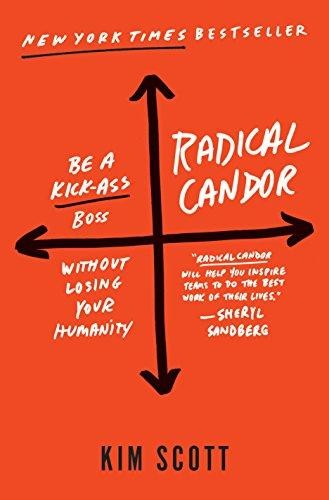
Radical Candor is Kim Scott's framework for the central management challenge: how to tell people what they need to hear without damaging the relationship. The book is built on a two-by-two matrix. One axis is "care personally" — genuine investment in the human being in front of you. The other is "challenge directly" — willingness to say difficult things rather than avoid them. Radical Candor sits in the upper-right quadrant, where both are present simultaneously.
The three failure modes are more interesting than the ideal. Ruinous Empathy is the most common — caring personally but failing to challenge directly, which produces false comfort and stunted growth. Manipulative Insincerity is caring neither about the person nor about honesty, which Scott associates with corporate politics. Obnoxious Aggression is challenging directly without caring about the person — honest feedback delivered with contempt.
Scott argues that most managers default to Ruinous Empathy because being liked feels safer than being useful. But withholding honest feedback is a form of disrespect — it treats people as too fragile to hear the truth and robs them of the chance to improve. The antidote is building enough personal trust that directness doesn't feel like an attack. Care first, then challenge.
The second half of the book is practical: how to run 1:1s, how to give and receive feedback, how to think about the different growth trajectories of your team members, and how to handle the political dynamics that make honesty difficult in large organizations. Scott is particularly useful on the distinction between "superstar" employees who want to grow fast and "rockstar" employees who want to do excellent work without taking on more responsibility — both are valuable, and most managers only know how to reward one type.
The big ideas
- 1.
Radical Candor means caring personally and challenging directly at the same time. Either one without the other produces a worse outcome than both together.
- 2.
Ruinous Empathy is the most common management failure — prioritizing someone's short-term comfort over their long-term development by withholding honest feedback.
- 3.
The goal of feedback is not to make someone feel good or bad but to help them be more effective. That goal requires enough personal trust that the feedback is heard rather than defended against.
