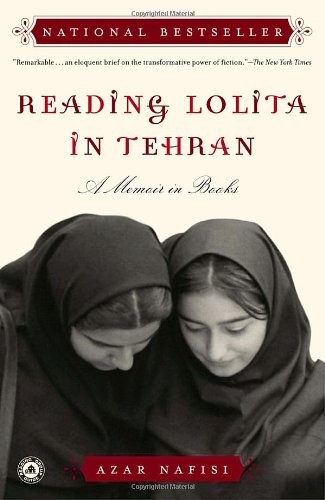
Talk to Reading Lolita in Tehran: A Memoir in Books like its author wrote you back.
Get the ideas that fit your life — not generic summaries.
- Chat with the book
- Audiobook-style main ideas
- Adapts to your life and goals
- Helps you take action
Reading Lolita in Tehran: A Memoir in Books, in detail
Azar Nafisi spent years teaching literature at universities in Tehran before the restrictions on what she could teach — and who she could teach — became intolerable. Reading Lolita in Tehran is her memoir of that period, structured around the secret book club she ran in her home after resigning, where seven of her former female students gathered weekly to read banned Western novels: Nabokov, Fitzgerald, James, Austen.
The book is organized in four sections, each named for one of the authors read in the group — Lolita, Gatsby, James, Austen. Nafisi moves between the text discussions and the students' individual lives: their families' compromises and resistances under the Islamic Republic, their complicated relationships with the veil, their marriages and escapes and stays. The books they read function less as subjects for literary analysis and more as mirrors, provocations, and evidence that a fuller human life is possible.
Nafisi's central claim is that literature has a particular power under totalitarianism: it preserves the complexity and moral ambiguity that authoritarian ideology has to flatten. To read Humbert Humbert as a reliable narrator, to read Gatsby as a critique of American mythmaking, is to practice a kind of thinking the state cannot control. The clandestine book club is not just escape — it's a small defended space of personhood.
The memoir has attracted both admiration and criticism. Some Iranian readers have disputed details or questioned Nafisi's perspective as an elite, Western-educated Tehrani. The political atmosphere she describes — surveillance, executions, the Iran-Iraq War, the moral police — is real and documented. The book's literary readings are sharp. Its strongest moments are when Nafisi holds the two strands together: what a specific novel does, and what it meant to read that novel under those particular conditions.
The big ideas
- 1.
Literature functions differently under totalitarianism than under freedom. When the state controls what is real and what is permitted, fiction becomes one of the few spaces where genuine moral complexity can be encountered.
- 2.
The veil, for Nafisi and her students, was not primarily a religious symbol but a political imposition — a mechanism for erasing individual identity in public space.
- 3.
Nabokov's Lolita is used to argue that the moral clarity of a narrative can exist independently of whether its narrator is reliable or even sympathetic.
