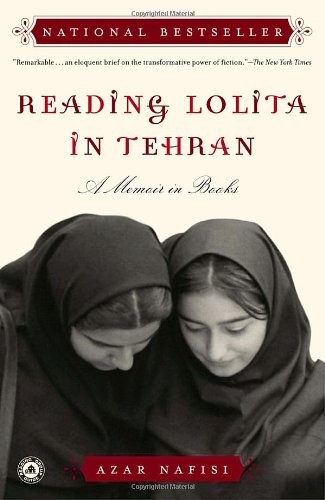
Reading Lolita in Tehran: A Memoir in Books by Azar Nafisi is a 2003 memoir book about literature, resistance, women's rights. Literature functions differently under totalitarianism than under freedom. When the state controls what is real and what is permitted, fiction becomes one of the few spaces where genuine moral complexity can be encountered.
Summary
Azar Nafisi spent years teaching literature at universities in Tehran before the restrictions on what she could teach — and who she could teach — became intolerable. Reading Lolita in Tehran is her memoir of that period, structured around the secret book club she ran in her home after resigning, where seven of her former female students gathered weekly to read banned Western novels: Nabokov, Fitzgerald, James, Austen.
The book is organized in four sections, each named for one of the authors read in the group — Lolita, Gatsby, James, Austen. Nafisi moves between the text discussions and the students' individual lives: their families' compromises and resistances under the Islamic Republic, their complicated relationships with the veil, their marriages and escapes and stays. The books they read function less as subjects for literary analysis and more as mirrors, provocations, and evidence that a fuller human life is possible.
Nafisi's central claim is that literature has a particular power under totalitarianism: it preserves the complexity and moral ambiguity that authoritarian ideology has to flatten. To read Humbert Humbert as a reliable narrator, to read Gatsby as a critique of American mythmaking, is to practice a kind of thinking the state cannot control. The clandestine book club is not just escape — it's a small defended space of personhood.
The memoir has attracted both admiration and criticism. Some Iranian readers have disputed details or questioned Nafisi's perspective as an elite, Western-educated Tehrani. The political atmosphere she describes — surveillance, executions, the Iran-Iraq War, the moral police — is real and documented. The book's literary readings are sharp. Its strongest moments are when Nafisi holds the two strands together: what a specific novel does, and what it meant to read that novel under those particular conditions.
Talk to Reading Lolita in Tehran: A Memoir in Books like its author wrote you back.
Get the ideas that fit your life — not generic summaries.
- Chat with the book
- Audiobook-style main ideas
- Adapts to your life and goals
- Helps you take action
Key takeaways
- 1.
Literature functions differently under totalitarianism than under freedom. When the state controls what is real and what is permitted, fiction becomes one of the few spaces where genuine moral complexity can be encountered.
- 2.
The veil, for Nafisi and her students, was not primarily a religious symbol but a political imposition — a mechanism for erasing individual identity in public space.
- 3.
Nabokov's Lolita is used to argue that the moral clarity of a narrative can exist independently of whether its narrator is reliable or even sympathetic.
- 4.
The secret book club created a protected interiority — a space for honest conversation and imagination — that the public world of Islamic Republic Tehran had systematically closed off.
- 5.
Authoritarian regimes are threatened by fiction precisely because fiction requires inhabiting other people's perspectives. Empathy is political.
- 6.
Gatsby's failure is read by Nafisi not as an indictment of ambition but as a study in the danger of confusing a dream of self with a genuine self.
- 7.
The women in the group had to negotiate between their public compliance with theocratic rules and their private selves daily. That negotiation was exhausting and corrosive.
- 8.
Nafisi ultimately leaves Iran. The decision is presented not as triumph but as a kind of defeat — the inability to find a way to remain.
Discussion questions
Use these on your own, with a book club, or as chat starters in Superbook. Book club version, ready to copy or print →
- 1.
Nafisi argues that literature is a form of resistance. Does that claim hold outside the specific context of life under a theocratic government?
- 2.
Each section is named for a Western author. Is the book's dependence on the Western literary canon a strength or a limitation? What would the book look like organized around Iranian literature?
- 3.
How do Nafisi's students' responses to the books differ from each other, and what do those differences reveal about the variety of women's experience in Tehran?
- 4.
Humbert Humbert is a manipulative, self-serving narrator. Nafisi insists that reading him carefully is a form of moral practice. Do you agree?
- 5.
The veil appears throughout the book as a symbol, a legal imposition, and a daily reality. How does Nafisi's treatment of it compare to how Western observers typically discuss it?
- 6.
What does it mean that the most intimate conversations in the book happen in a private apartment over literature rather than in any institutional setting?
- 7.
Nafisi is from an educated, relatively privileged family. How does that background shape what she sees and what she misses in the society she describes?
- 8.
The book was published in English for a Western audience. Does that change how you read it? What is Nafisi asking Western readers to understand?
- 9.
Which of the four authors — Nabokov, Fitzgerald, James, Austen — seems most alive to you in Nafisi's reading? Why?
- 10.
Nafisi leaves Iran near the end. Is her departure a form of defeat or survival, and how does the book frame it?
- 11.
How does the experience of the book club differ from any reading group you have been part of, and what accounts for the difference?
- 12.
What would you put on the syllabus for a secret book club convened in conditions of political repression? How does that thought experiment reveal what you value in literature?
Themes
Frequently asked questions
-
Is Reading Lolita in Tehran worth reading?
Yes, particularly for readers interested in how literature intersects with political life and for anyone curious about women's experience in post-revolutionary Iran. The literary analysis is genuinely sharp. Some of the political framing has been contested by Iranian critics, which is worth knowing before reading.
-
How long does it take to read Reading Lolita in Tehran?
Around seven to eight hours. The 352-page book is dense with both memoir and literary commentary. Readers familiar with the novels Nafisi discusses — especially Nabokov and Fitzgerald — will move faster than those encountering them for the first time.
-
Do I need to have read Lolita or Gatsby to understand this book?
No, but having read them enriches the experience considerably. Nafisi provides enough summary and analysis to follow her arguments without prior reading, but the book is in ongoing dialogue with those texts.
-
Who should read Reading Lolita in Tehran?
Readers of literary memoir, people interested in Iran and the Islamic Republic, and anyone curious about the political dimensions of reading and teaching literature. It is also an effective choice for book clubs because it models exactly that kind of sustained group discussion.
-
Has the book been criticized?
Yes. Some Iranian scholars and writers have questioned Nafisi's characterizations of Iranian society and suggested the book presents a view shaped more by its Western readership than by the complexity of life inside Iran. These critiques are worth reading alongside the memoir itself.
Similar books
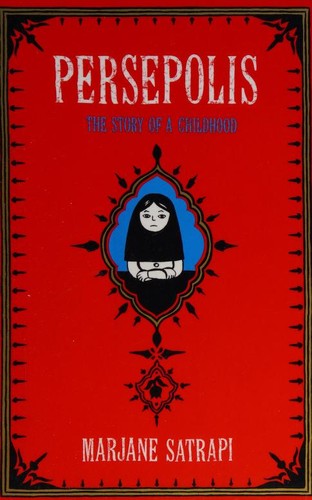
Persepolis: The Story of a Childhood
Marjane Satrapi
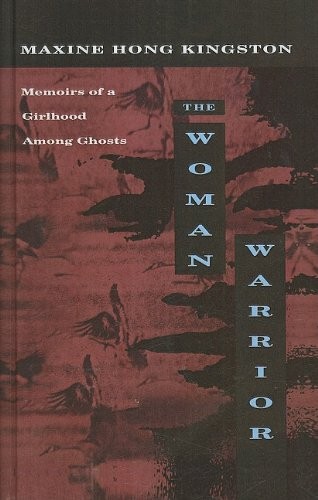
The Woman Warrior: Memoirs of a Girlhood Among Ghosts
Maxine Hong Kingston

Man's Search for Meaning
Viktor E. Frankl
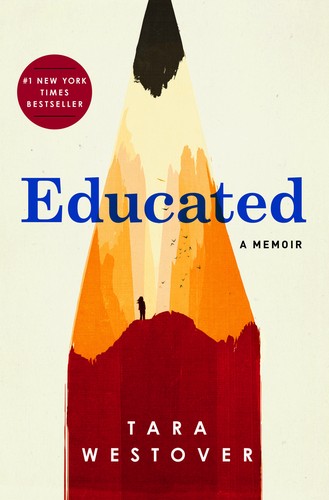
Educated: A Memoir
Tara Westover
