Talk to Reminiscences of a Stock Operator like its author wrote you back.
Get the ideas that fit your life — not generic summaries.
- Chat with the book
- Audiobook-style main ideas
- Adapts to your life and goals
- Helps you take action
What it argues
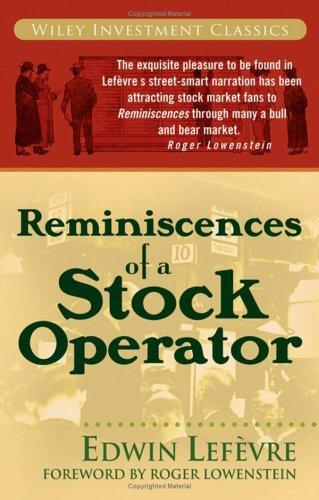
Reminiscences of a Stock Operator is a fictionalized biography of Jesse Livermore, the most famous speculator of the early twentieth century, told through the voice of "Larry Livingston." First published in 1923 as a series in the Saturday Evening Post, the book follows Livermore from his teenage years trading in bucket shops — illegal off-exchange betting parlors where customers wagered on price movements — through his multiple fortunes and bankruptcies on Wall Street. Edwin Lefèvre, a financial journalist, wrote it in close collaboration with Livermore himself.
The book's enduring appeal is not its historical narrative but the observations Livingston makes about markets and human nature along the way. These emerge organically from the story rather than as numbered lessons. Among the most quoted: the market is never wrong but opinions often are; the big money is made by sitting, not trading; a man must believe in himself and his judgment if he expects to make a living from speculation; and that the speculator's chief enemy is himself, specifically the twin impulses of impatience and wishful thinking.
What it gets right
- 1.
The big money is made not by frequent trading but by holding a strong position through a major move. Sitting and waiting is harder than it sounds.
- 2.
Livermore cut losses quickly and let winners run — a principle nearly every professional trader endorses and nearly every retail investor reverses.
- 3.
Price and volume patterns precede fundamental explanations. By the time the news explains a move, the move is usually over.
What it covers
Who wrote it
Edwin Lefèvre was an American journalist, author, and diplomat who wrote extensively about Wall Street in the early twentieth century. He published numerous short stories and several novels about financial life, but Reminiscences of a Stock Operator — written in close collaboration with Jesse Livermore — is the work for which he is remembered. Lefèvre had unusual access to Livermore's thinking and methods and translated them into a narrative that reads as both memoir and psychological case study. The book has never gone out of print since its original serialization in 1923.
