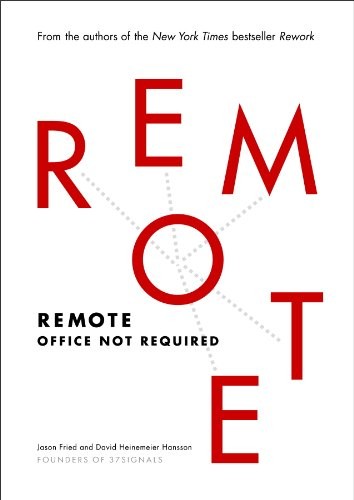
Talk to Remote: Office Not Required like its author wrote you back.
Get the ideas that fit your life — not generic summaries.
- Chat with the book
- Audiobook-style main ideas
- Adapts to your life and goals
- Helps you take action
What it argues
Remote was published in 2013, years before the pandemic forced the question on most organizations. Jason Fried and David Heinemeier Hansson — the founders of Basecamp — had been running a distributed company for a decade and wrote the book to make the case that remote work isn't a compromise but a competitive advantage. Their argument is that the traditional office is itself a productivity problem: open plans, endless meetings, and the expectation of constant availability destroy the kind of focused work that actually produces results.
The book is structured around objections. Each chapter takes a common argument against remote — "how do you know they're working?", "collaboration requires being in the same room", "company culture dies without a physical office" — and dismantles it. Fried and DHH are direct and often blunt. They don't try to address every edge case; they argue from Basecamp's experience and challenge readers to test the assumptions behind their current working arrangements.
What it gets right
- 1.
The traditional office is not neutral ground — open plans, constant interruptions, and mandatory presence actively undermine focused work for many people.
- 2.
Managing remote workers requires shifting from presence-based oversight to output-based evaluation: what gets done, not who was online when.
- 3.
Asynchronous communication — email, documents, recorded video — is often more effective than synchronous meetings, which interrupt deep work and require everyone to be available at the same time.
What it covers
Who wrote it
Jason Fried and David Heinemeier Hansson are co-founders of Basecamp, a project management software company that has operated as a distributed team since its founding in 1999. Hansson also created the Ruby on Rails web framework. Together they co-authored Rework (2010) and It Doesn't Have to Be Crazy at Work (2018), developing a consistent philosophy of smaller teams, simpler tools, and skepticism toward startup hustle culture. Their writing is known for being direct, opinionated, and deliberately contrarian toward conventional business wisdom.
