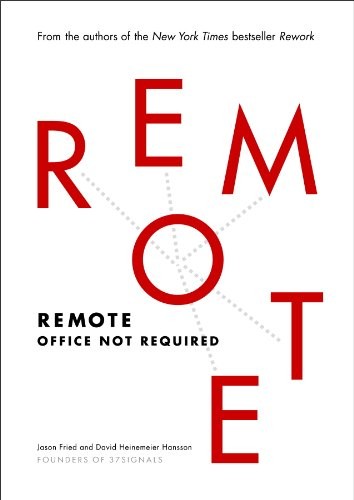
Talk to Remote: Office Not Required like its author wrote you back.
Get the ideas that fit your life — not generic summaries.
- Chat with the book
- Audiobook-style main ideas
- Adapts to your life and goals
- Helps you take action
Remote: Office Not Required, in detail
Remote was published in 2013, years before the pandemic forced the question on most organizations. Jason Fried and David Heinemeier Hansson — the founders of Basecamp — had been running a distributed company for a decade and wrote the book to make the case that remote work isn't a compromise but a competitive advantage. Their argument is that the traditional office is itself a productivity problem: open plans, endless meetings, and the expectation of constant availability destroy the kind of focused work that actually produces results.
The book is structured around objections. Each chapter takes a common argument against remote — "how do you know they're working?", "collaboration requires being in the same room", "company culture dies without a physical office" — and dismantles it. Fried and DHH are direct and often blunt. They don't try to address every edge case; they argue from Basecamp's experience and challenge readers to test the assumptions behind their current working arrangements.
The practical advice covers hiring for remote work, managing by output rather than presence, building asynchronous communication habits, and avoiding the trap of replicating office culture online. They emphasize writing over meetings, trust over surveillance, and results over face time. The book also tackles the risks of remote work honestly: isolation, difficulty separating work from home, and the challenge of building relationships without shared physical space.
Remote is a short book and reads quickly. By 2013 standards it was ahead of its time; by 2026 standards much of it reads as established practice in tech. For organizations still wrestling with hybrid policies and the politics of returning to office, the book's central question — what problem does the office actually solve? — remains sharper than most of the commentary around it. The authors don't pretend remote works for every role or every person, but they push the burden of proof back onto the assumption that physical presence is necessary.
The big ideas
- 1.
The traditional office is not neutral ground — open plans, constant interruptions, and mandatory presence actively undermine focused work for many people.
- 2.
Managing remote workers requires shifting from presence-based oversight to output-based evaluation: what gets done, not who was online when.
- 3.
Asynchronous communication — email, documents, recorded video — is often more effective than synchronous meetings, which interrupt deep work and require everyone to be available at the same time.
