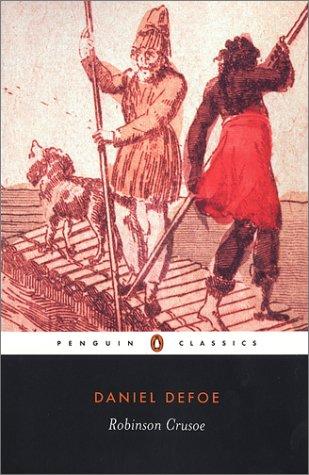
Talk to Robinson Crusoe like its author wrote you back.
Get the ideas that fit your life — not generic summaries.
- Chat with the book
- Audiobook-style main ideas
- Adapts to your life and goals
- Helps you take action
Robinson Crusoe, in detail
Robinson Crusoe is the fictional memoir of an Englishman shipwrecked on a deserted tropical island for twenty-eight years. Crusoe salvages what he can from the wreck, builds a shelter, grows crops, domesticates animals, and constructs a relatively comfortable existence through methodical labor — a process Defoe renders in practical detail that was novel in 1719 and remains oddly satisfying. The first two-thirds of the book are essentially a one-man survival story, interrupted occasionally by Crusoe's Protestant providentialist reflections on why God has placed him here.
The second phase begins when Crusoe discovers a footprint in the sand and eventually encounters Friday, a man he rescues from cannibals and who becomes his servant and companion. This section of the novel is where its modern reputation becomes most complicated: Friday is presented through a paternalistic colonial lens that is inseparable from the novel's ideological foundations. Crusoe teaches Friday English, Christian doctrine, and European customs, and Friday's grateful acceptance of his own subordination is treated as natural and good. The novel's celebration of English mercantile Protestant civilization is not incidental — it is the point.
Robinson Crusoe is widely considered the first English novel, or at least the originating text of the bourgeois realist novel. Defoe's insistence on specific practical detail — how much powder Crusoe has, how he makes pots, how he builds his fence — established a mode of fictional realism that Fielding, Richardson, and every subsequent novelist inherited. The book was a runaway bestseller in 1719, the most widely read English fiction of the eighteenth century, and it created a genre: the castaway story, which has never stopped being retold.
Reading it today requires holding two things simultaneously: the genuine narrative pleasure of Crusoe's survival project, and a clear-eyed awareness of what the novel embodies about European colonialism. It is not a book you need to love, but it is a book worth reading — both as a historical artifact and as an unusually direct expression of the worldview that produced the British Empire.
The big ideas
- 1.
Defoe invented the survival narrative as a literary genre. Every castaway story since — from Treasure Island to The Martian — is working in Crusoe's shadow.
- 2.
The novel's practical detail is its most distinctive feature. Defoe describes Crusoe's methods with the specificity of a tradesman's manual, which was entirely new in 1719.
- 3.
Crusoe's Protestant providentialism — his constant search for God's purpose in his isolation — is not decorative. It is what gives him the psychological resources to survive without going mad.
