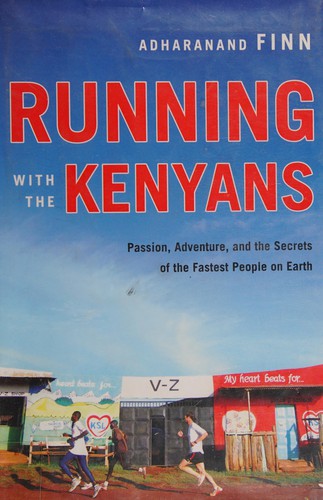
Talk to Running with the Kenyans like its author wrote you back.
Get the ideas that fit your life — not generic summaries.
- Chat with the book
- Audiobook-style main ideas
- Adapts to your life and goals
- Helps you take action
Running with the Kenyans, in detail
Running with the Kenyans is Adharanand Finn's account of uprooting his family and moving to Iten, a small town in the Kenyan Rift Valley that has produced more world-class distance runners than anywhere else on earth, to train alongside them and understand why they are so dominant. Finn, a British journalist and recreational runner, was motivated partly by curiosity and partly by the ordinary runner's desire to close the gap between their performance and what seems impossibly far away. What he found was more cultural and more human than he expected.
The book functions on several levels. As a training journal, it is honest about the humbling experience of a competent amateur trying to keep pace with athletes who are, in any measurable sense, a different category of human. Finn runs with teenagers who will go on to Olympic medals and finds himself walking up hills they jog without apparent effort. The training is twice-daily, high-volume, and performed largely on dirt roads in altitude conditions that provide a physiological advantage unavailable to runners at sea level.
But the more interesting material is observational. Finn investigates the theories about Kenyan dominance — genetics, altitude, diet, barefoot childhood development, running to school — and finds each partially supported and none sufficient on its own. What he comes away with is a sense that the culture of Iten, where running is the primary route to prosperity and status, creates a selection and training environment of unusual intensity. The children who become elite runners were motivated young, trained early, and competed fiercely long before anyone was trying to make them.
The memoir is warm and self-aware. Finn doesn't overstate his own progress or the lessons he draws, and his portrait of Kenyan runners as individual people rather than specimens of athletic mystery is the book's best quality. It is a book about what elite performance looks like from the inside of a culture that produces it, written by someone standing at the edge of that culture trying to understand it.
The big ideas
- 1.
Kenyan dominance in distance running is not explained by any single factor. Altitude, childhood physical activity, barefoot running, high mileage training culture, and economic motivation all contribute.
- 2.
Running to school as a child — covering several kilometers daily on dirt roads — may develop biomechanical efficiency and aerobic base in ways that structured training programs cannot replicate later.
- 3.
Elite Kenyan runners train in groups. The communal nature of training in Iten creates competitive push and accountability that solo training rarely achieves at the same intensity.
