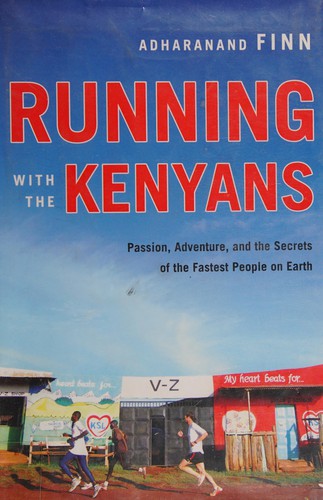
Running with the Kenyans by Adharanand Finn is a 2012 memoir book about running, kenyan athletics, training culture. Kenyan dominance in distance running is not explained by any single factor. Altitude, childhood physical activity, barefoot running, high mileage training culture, and economic motivation all contribute.
Summary
Running with the Kenyans is Adharanand Finn's account of uprooting his family and moving to Iten, a small town in the Kenyan Rift Valley that has produced more world-class distance runners than anywhere else on earth, to train alongside them and understand why they are so dominant. Finn, a British journalist and recreational runner, was motivated partly by curiosity and partly by the ordinary runner's desire to close the gap between their performance and what seems impossibly far away. What he found was more cultural and more human than he expected.
The book functions on several levels. As a training journal, it is honest about the humbling experience of a competent amateur trying to keep pace with athletes who are, in any measurable sense, a different category of human. Finn runs with teenagers who will go on to Olympic medals and finds himself walking up hills they jog without apparent effort. The training is twice-daily, high-volume, and performed largely on dirt roads in altitude conditions that provide a physiological advantage unavailable to runners at sea level.
But the more interesting material is observational. Finn investigates the theories about Kenyan dominance — genetics, altitude, diet, barefoot childhood development, running to school — and finds each partially supported and none sufficient on its own. What he comes away with is a sense that the culture of Iten, where running is the primary route to prosperity and status, creates a selection and training environment of unusual intensity. The children who become elite runners were motivated young, trained early, and competed fiercely long before anyone was trying to make them.
The memoir is warm and self-aware. Finn doesn't overstate his own progress or the lessons he draws, and his portrait of Kenyan runners as individual people rather than specimens of athletic mystery is the book's best quality. It is a book about what elite performance looks like from the inside of a culture that produces it, written by someone standing at the edge of that culture trying to understand it.
Talk to Running with the Kenyans like its author wrote you back.
Get the ideas that fit your life — not generic summaries.
- Chat with the book
- Audiobook-style main ideas
- Adapts to your life and goals
- Helps you take action
Key takeaways
- 1.
Kenyan dominance in distance running is not explained by any single factor. Altitude, childhood physical activity, barefoot running, high mileage training culture, and economic motivation all contribute.
- 2.
Running to school as a child — covering several kilometers daily on dirt roads — may develop biomechanical efficiency and aerobic base in ways that structured training programs cannot replicate later.
- 3.
Elite Kenyan runners train in groups. The communal nature of training in Iten creates competitive push and accountability that solo training rarely achieves at the same intensity.
- 4.
High-altitude training at 2,400 meters increases red blood cell production and oxygen-carrying capacity, providing a sustained performance advantage when competing at lower elevations.
- 5.
The economic stakes of running in Kenya are high enough to produce ferocious competitive selection. Thousands of athletes are genuinely competing for places; only the exceptional survive to race internationally.
- 6.
Running economy — the efficiency with which a runner uses oxygen — may be influenced by years of barefoot or minimal footwear activity in childhood, before formal running training begins.
- 7.
The Western amateur's relationship to running is often complicated by technology, data, and goal-setting in ways that Kenyan runners' more direct relationship to the activity does not share.
Discussion questions
Use these on your own, with a book club, or as chat starters in Superbook. Book club version, ready to copy or print →
- 1.
Finn moves his entire family to Kenya to pursue a journalistic and personal question. How does that kind of full-immersion approach change what he learns compared to reporting from the outside?
- 2.
The book raises the nature-versus-nurture question about athletic excellence without fully resolving it. Where do you think the balance lies, and does the answer matter for how ordinary runners think about their own potential?
- 3.
Kenyan runners reportedly think very little about pacing or tactics during training — they run hard, together, until they can't. How different is that from how most Western runners train, and what does the difference reveal?
- 4.
Finn is honest about the gap between his own performance and the athletes he runs with. How does he manage the potential condescension or exoticization of his subject, and does he succeed?
- 5.
The book describes a culture where running is a route out of poverty. How does economic desperation shape athletic culture differently than running for fitness or self-actualization?
- 6.
Several theories about Kenyan dominance — genetics, altitude, barefoot childhood — are examined and found partly correct. What does the absence of a single explanation tell us about how complex performance advantages develop?
- 7.
Finn finishes the book by running a race in Kenya. What does the decision to compete rather than just observe say about the book's purpose and his relationship to the subject?
- 8.
Children in Iten run miles to school every day long before anyone identifies them as athletic prospects. What opportunities for similar early physical development exist in the environments most children grow up in today?
- 9.
The communal training group in Iten seems to produce something an individual training plan cannot. What in your own experience — athletic or otherwise — has benefited most from doing it in a community?
- 10.
Running with the Kenyans sits between travel writing, sports journalism, and memoir. What does each of those genres contribute to what the book achieves?
- 11.
After spending months in Iten, Finn returns to England. What does the contrast between the two environments reveal about how culture shapes what we value in physical activity?
Themes
Frequently asked questions
-
Do you need to be a runner to enjoy Running with the Kenyans?
No. The book works well as travel writing and cultural observation. Readers with no interest in running will find the portrait of Iten and the athletes who live there absorbing. That said, runners will connect more directly with the training descriptions and the competitive psychology.
-
How long does Running with the Kenyans take to read?
Around four to five hours. The book is lightly paced and readable, moving between personal experience, cultural observation, and sports science in a way that keeps the pages turning.
-
What explains Kenyan running dominance?
Finn's conclusion is that no single factor explains it. Altitude, childhood running culture, economic incentive, barefoot development, and the intensity of competition in the local running community all contribute. The dominance is real and documented but the explanation is genuinely multifactorial.
-
Is this book similar to Born to Run?
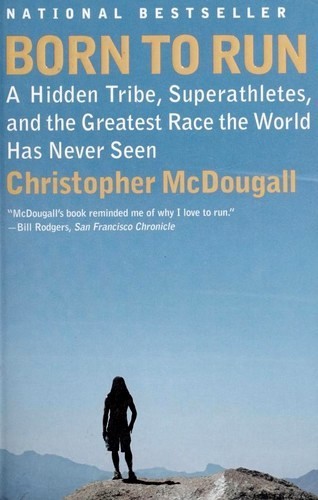
There are overlaps: both investigate elite running cultures outside the Western mainstream, both are written by curious amateur runners, and both question assumptions about how performance develops. Born to Run focuses more on barefoot running as a thesis; Running with the Kenyans is more open-ended and observational.
-
Did Adharanand Finn improve as a runner from his time in Kenya?
Yes, measurably. His times improved during his stay, which he attributes to the higher mileage, altitude, and competitive training environment. He is honest that the improvement was from a recreational base and that he remained far outside elite performance levels.