Talk to Spark like its author wrote you back.
Get the ideas that fit your life — not generic summaries.
- Chat with the book
- Audiobook-style main ideas
- Adapts to your life and goals
- Helps you take action
Spark, in detail
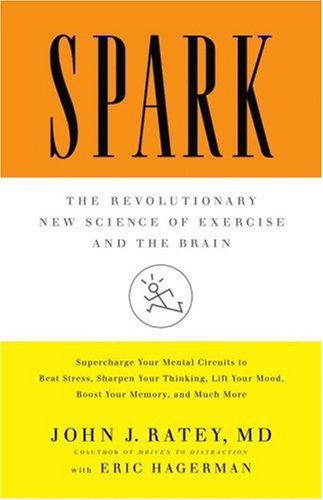
Spark is John Ratey's argument, grounded in neuroscience, that aerobic exercise is the single most powerful thing most people can do for their brain. Ratey is a clinical psychiatrist at Harvard Medical School who has spent decades at the intersection of brain science and behavior, and the book is a synthesis of research showing that exercise doesn't just benefit the body — it restructures the brain, generates new neurons, and functions as an effective treatment for depression, anxiety, ADHD, addiction, aging, and even hormonal stress responses.
The book opens with the story of Naperville Central High School in Illinois, which moved PE to the beginning of the school day and shifted from performance measurement to cardiovascular conditioning. The academic results were striking: Naperville students outperformed the rest of Illinois and ranked among the top students in international science and math comparisons. The PE-academic connection set the tone for a book that treats exercise primarily as a cognitive and psychiatric intervention.
Ratey covers specific conditions chapter by chapter: stress, anxiety, depression, ADHD, addiction, hormonal changes, and aging. In each case he reviews the neuroscience — how exercise affects BDNF (brain-derived neurotrophic factor, which he calls "Miracle-Gro for the brain"), dopamine, serotonin, norepinephrine, and cortisol — and shows how that mechanism explains the therapeutic effect. The evidence base is not uniform: the research on exercise and depression is among the strongest in psychiatry; the evidence for exercise and ADHD, while promising, is thinner. Ratey presents the stronger and weaker cases with similar enthusiasm, which some readers find inspiring and others find credulous.
The practical prescriptions are specific: aerobic exercise, at moderate to high intensity, for at least twenty to thirty minutes most days, with variation in intensity to challenge the brain's adaptive response. Ratey argues strongly against the idea that exercise needs to be formal gym time — walking, dancing, and active daily movement produce cognitive benefits. The book's thesis is ultimately that the sedentary life is not just a cardiovascular risk; it is a direct assault on the organ that makes us who we are.
The big ideas
- 1.
Aerobic exercise increases production of BDNF, a protein Ratey calls 'Miracle-Gro for the brain,' which supports the growth of new neurons and the formation of new connections.
- 2.
Exercise is an effective treatment for depression, comparable in outcome to antidepressant medication in multiple trials, and may have more durable effects by changing the brain's structure.
- 3.
The Naperville Central High School experiment showed that moving PE to the beginning of the day and focusing on cardiovascular fitness rather than performance dramatically improved academic results.
