Talk to Station Eleven like its author wrote you back.
Get the ideas that fit your life — not generic summaries.
- Chat with the book
- Audiobook-style main ideas
- Adapts to your life and goals
- Helps you take action
Station Eleven, in detail
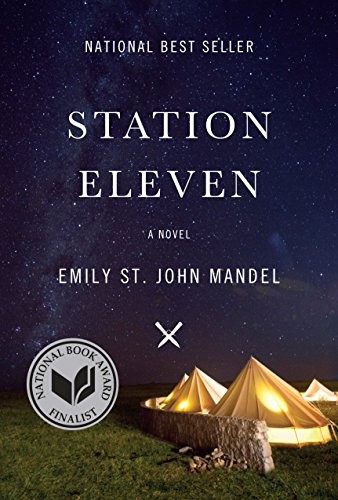
Station Eleven begins with an actor dying of a heart attack onstage during a production of King Lear in Toronto. Within hours, a flu pandemic begins killing ninety-nine percent of the world's population. The novel moves between the pre-collapse world — the lives of the actor, his ex-wives, a paparazzo who becomes a paramedic, a child actress who grows up in the aftermath — and the post-collapse world, twenty years later, where a Traveling Symphony performs Shakespeare and classical music for settlements of survivors in the Great Lakes region. Their motto is a line from Star Trek Voyager: survival is insufficient.
The novel is structured as a mosaic of timelines. Mandel is interested less in the mechanics of collapse than in the question of what survives it and why. Art survives — the Symphony performs because people need beauty, not just calories. Memory survives, in the form of a graphic novel called Station Eleven that the child actress carries with her and that turns out to connect her to the actor who died on the first page. Objects survive, accumulating meaning across the decades. The structure enacts its own argument: everything is connected, and the connections only become visible through time.
Mandel's prose is calm and precise, which is an unusual choice for apocalyptic material. The horror of the pandemic is handled obliquely — we see its aftermath more than its unfolding — and that restraint allows the novel to be warm rather than harrowing. It is more interested in what remains than what was destroyed, which distinguishes it from most post-apocalyptic fiction.
The audience for Station Eleven is people who find the end-of-world genre tiresome but are drawn to novels about loss and connection. It shares more DNA with literary fiction about grief and memory — Remains of the Day, Atonement — than with The Road or other survival thrillers. Readers who want genre momentum will find it slow. Readers who come for the emotional texture will find it close to perfect.
The big ideas
- 1.
'Survival is insufficient' is not just the novel's motto but its thesis: human beings need beauty and meaning, not only calories and shelter, and cultures that forget this do not endure.
- 2.
The mosaic structure — moving freely between timelines — is the novel's formal argument that all human connections persist beyond the moment in which they are made.
- 3.
Mandel treats the pre-pandemic world with the same elegiac attention as the post-pandemic one. The loss is not just of people but of ordinary life: electricity, the internet, airports, pharmacies.
