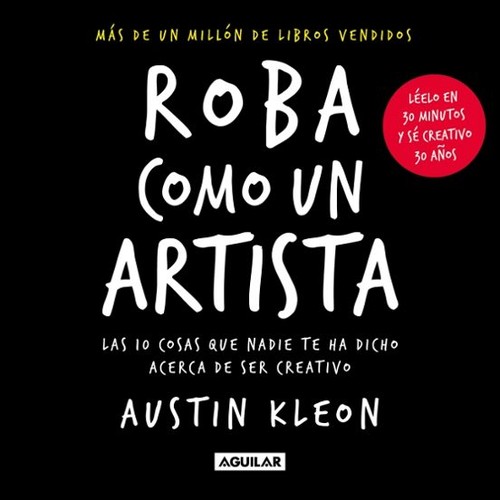
Talk to Steal Like an Artist like its author wrote you back.
Get the ideas that fit your life — not generic summaries.
- Chat with the book
- Audiobook-style main ideas
- Adapts to your life and goals
- Helps you take action
Steal Like an Artist, in detail
Steal Like an Artist is Austin Kleon's short, illustrated guide to the creative process, built around the premise that nothing is truly original — all creative work is built from and inspired by what came before. The title is a provocation: stealing in the sense Kleon means is not plagiarism but the deep, transformative absorption of influences that makes genuinely new work possible. You can't create in a vacuum, and trying to be original before you've mastered your influences typically produces work that's neither original nor good.
The book's ten principles are brief and visual, delivered in a format that reflects the content: Kleon works with found text, cut-up poetry, and hand-lettered typography, and the book design itself is part of the argument for how creative constraints produce interesting work. The principles include: steal from the best, not the mediocre; don't wait until you know who you are to get started; write the book you want to read; use your hands; side projects are important; geography doesn't hold you back; be nice; be boring (it has good side effects on your creative output); creativity is subtraction.
Kleon's core insight is that the earliest stage of creative development is imitation — finding the people you love, studying them deeply, and then stealing from them. What makes this productive rather than derivative is the process of transformation: as you steal from many sources and your own experiences press into the material, something that is genuinely yours emerges. The obsession with originality before developing craft is a contemporary anxiety that Kleon argues is historically unfounded.
The book is short enough to read in an hour and designed to be returned to repeatedly. It is particularly useful for people just starting a creative practice who feel they don't have enough "original ideas" to begin.
The big ideas
- 1.
Nothing is completely original. All creative work builds on what came before. The task is not to invent from nothing but to steal well — from the right sources, deeply and transformatively.
- 2.
Build a creative genealogy: find the one artist you love most, find who they loved, and so on. This is your inheritance. Study it.
- 3.
Start making things before you feel ready. You discover who you are through the work, not before it.
