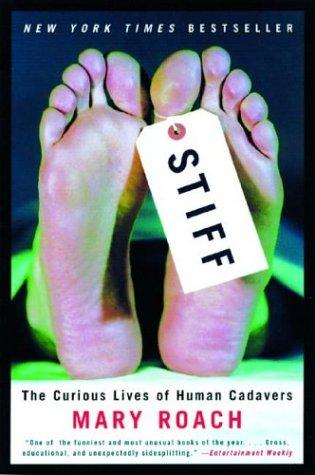
Talk to Stiff: The Curious Lives of Human Cadavers like its author wrote you back.
Get the ideas that fit your life — not generic summaries.
- Chat with the book
- Audiobook-style main ideas
- Adapts to your life and goals
- Helps you take action
What it argues
Stiff follows the human body after death — through anatomy labs, crash-test facilities, forensic research farms, military ballistics testing, and the history of surgical education. Mary Roach spent two years visiting the places and people who work with cadavers, and the result is a book that is simultaneously funny, respectful, and deeply informative. Her central argument is that donated bodies serve the living in ways most people never think about, and that the squeamishness surrounding death prevents a frank conversation about what those contributions are.
Each chapter covers a different use of the dead. Roach visits a head farm at a university where facial surgery is practiced on cadaver heads. She reports from a forensic anthropology research facility — colloquially known as the "body farm" — where decomposition is studied to help investigators date deaths. She traces the history of grave robbing and the anatomy riots of the eighteenth century, when medical schools needed bodies and the law provided none. She investigates the role of cadavers in automobile safety testing, airplane crash reconstruction, and ballistics research.
What it gets right
- 1.
Human cadavers have contributed to almost every major advance in surgery, trauma medicine, and human anatomy over the past five centuries.
- 2.
The anatomy riot era of the 18th and 19th centuries resulted from a genuine shortage of bodies for medical education and led to widespread grave robbing.
- 3.
Forensic body farms — facilities where decomposition is studied outdoors — provide the data investigators use to estimate time of death at crime scenes.
What it covers
Who wrote it
Mary Roach is an American science writer known for bringing humor and rigorous reporting to subjects most writers avoid. She is the author of seven books, including Bonk, Packing for Mars, Gulp, and Grunt, each exploring a different area of human biology or applied science. Roach has written for National Geographic, Outside, and Wired, among others. Her books reliably combine firsthand reporting, archival research, and a willingness to ask experts the questions everyone else is too polite to raise.
