Stiff: The Curious Lives of Human Cadavers by Mary Roach is a 2003 science book about death, human body, medical research. Human cadavers have contributed to almost every major advance in surgery, trauma medicine, and human anatomy over the past five centuries.
Summary
Stiff follows the human body after death — through anatomy labs, crash-test facilities, forensic research farms, military ballistics testing, and the history of surgical education. Mary Roach spent two years visiting the places and people who work with cadavers, and the result is a book that is simultaneously funny, respectful, and deeply informative. Her central argument is that donated bodies serve the living in ways most people never think about, and that the squeamishness surrounding death prevents a frank conversation about what those contributions are.
Each chapter covers a different use of the dead. Roach visits a head farm at a university where facial surgery is practiced on cadaver heads. She reports from a forensic anthropology research facility — colloquially known as the "body farm" — where decomposition is studied to help investigators date deaths. She traces the history of grave robbing and the anatomy riots of the eighteenth century, when medical schools needed bodies and the law provided none. She investigates the role of cadavers in automobile safety testing, airplane crash reconstruction, and ballistics research.
The writing is Roach's signature mix: meticulous research delivered with self-deprecating humor and genuine curiosity. She never lets the comedy cross into disrespect. The people she interviews — forensic anthropologists, anatomy professors, morticians, transplant surgeons — come across as thoughtful professionals who have worked out their own peace with the material they handle. Their perspectives on death are consistently more measured and less fearful than the general public's.
The book's final chapter addresses organ donation and the decision of what to do with one's own body after death. Roach ends not with morbidity but with a kind of practical generosity — the argument that cadaver donation is a significant and underappreciated act of service to strangers. Stiff is unusual in that it makes death genuinely interesting without being ghoulish, and manages to be one of the funnier books ever written on a subject that is, in most hands, deeply uncomfortable.
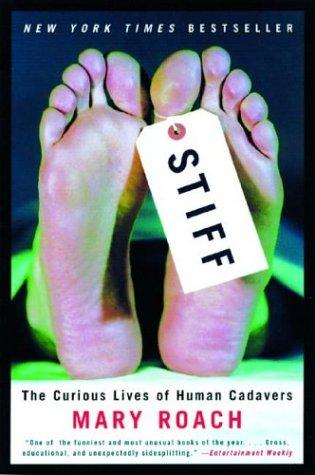
Talk to Stiff: The Curious Lives of Human Cadavers like its author wrote you back.
Get the ideas that fit your life — not generic summaries.
- Chat with the book
- Audiobook-style main ideas
- Adapts to your life and goals
- Helps you take action
Key takeaways
- 1.
Human cadavers have contributed to almost every major advance in surgery, trauma medicine, and human anatomy over the past five centuries.
- 2.
The anatomy riot era of the 18th and 19th centuries resulted from a genuine shortage of bodies for medical education and led to widespread grave robbing.
- 3.
Forensic body farms — facilities where decomposition is studied outdoors — provide the data investigators use to estimate time of death at crime scenes.
- 4.
Cadavers play an active role in automobile safety testing. Many car safety features exist because of what crash researchers learned from donated bodies.
- 5.
Organ donation and whole-body donation serve different needs. Whole-body donation to anatomy programs is far less common than most medical schools need.
- 6.
The humor and discomfort surrounding cadavers reflects a cultural fear of death that most people who work closely with the dead do not share.
- 7.
Plastination and other preservation techniques have transformed what's possible in anatomy education and public exhibitions like Body Worlds.
- 8.
Composting and other alternative disposition methods are gaining legal ground as environmental and practical alternatives to burial and cremation.
Discussion questions
Use these on your own, with a book club, or as chat starters in Superbook. Book club version, ready to copy or print →
- 1.
Roach opens with the observation that most people know almost nothing about what happens to donated bodies. Did anything in the book surprise you most?
- 2.
How do you think about your own body after death? Has reading Stiff shifted that at all?
- 3.
The anatomy riot era was partly driven by class: the bodies of the poor were taken while the wealthy were protected. Does that history feel distant or still relevant?
- 4.
Roach interviews people who work with cadavers daily. How did their attitudes toward death compare with your own?
- 5.
The book discusses several uses of cadavers — surgical training, crash testing, military ballistics, forensic research — that most people find uncomfortable to think about. Are some uses more acceptable to you than others, and why?
- 6.
Roach writes with humor about a subject many people treat as off-limits for comedy. Did that approach work for you, or were there moments where it felt inappropriate?
- 7.
What would it take to change your mind about whole-body donation, in either direction?
- 8.
The book argues that donated bodies are a form of service to strangers. Is that framing persuasive to you?
- 9.
Roach visits a forensic research facility where bodies decompose outdoors for research. How did you react to reading about that, and what does your reaction tell you about your own relationship to the subject?
- 10.
If you were designing a medical school anatomy curriculum, what ethical obligations would you want to build into how donated bodies are treated?
- 11.
The book briefly addresses religious objections to dissection and donation. How do you think communities with strong religious prohibitions should navigate a shortage of cadavers for medical education?
- 12.
What surprised you most about the role of cadavers in automotive or military research?
Themes
Frequently asked questions
-
Is Stiff appropriate to read if I'm squeamish?
It depends on the degree of squeamishness. Roach is candid about what cadavers look and smell like, but the tone is never gratuitous. Most readers who consider themselves squeamish find they can get through it — the humor helps, and Roach's obvious respect for the subject keeps it from feeling exploitative.
-
What is Stiff about, in one sentence?
It is a tour of what happens to human bodies after death — in anatomy labs, crash facilities, forensic research farms, and the history of surgical education — told with humor and genuine respect.
-
How long does it take to read Stiff?
About five hours at average reading pace. The chapters stand alone well, so it works as a book you read over several sessions.
-
Who should read Stiff?
Anyone curious about anatomy, medical history, forensics, or death more broadly. It's also a useful read for anyone considering organ or body donation who wants a realistic picture of what that involves.
-
Is Stiff disrespectful to the dead?
No. Roach is consistently aware of the ethical dimension and treats the people whose bodies she encounters with care. The humor is aimed at the living — at our discomfort and euphemism — not at the cadavers themselves.
Similar books
Gulp: Adventures on the Alimentary Canal
Mary Roach

Packing for Mars: The Curious Science of Life in the Void
Mary Roach
Bonk: The Curious Coupling of Science and Sex
Mary Roach
The Body: A Guide for Occupants
Bill Bryson
