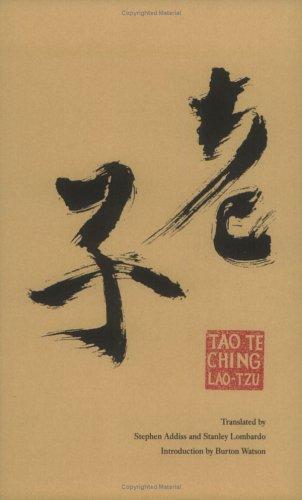
Talk to Tao Te Ching like its author wrote you back.
Get the ideas that fit your life — not generic summaries.
- Chat with the book
- Audiobook-style main ideas
- Adapts to your life and goals
- Helps you take action
What it argues
The Tao Te Ching is one of the most translated texts in world literature and the foundational scripture of Taoism. Attributed to the sage Laozi, it consists of 81 short chapters of verse and prose, composed in classical Chinese sometime between the 6th and 4th centuries BCE. Its apparent simplicity is deceptive: the text proceeds through paradox, negation, and deliberate ambiguity, refusing the kind of systematic argument that Western philosophical texts typically pursue. The Tao that can be named, the opening line announces, is not the eternal Tao.
The central concept is the Tao — the Way — which underlies and pervades all things but cannot be fully conceptualized or described. It is not a god, not a substance, not a principle in the Western sense. It is the ground of being, expressed in the spontaneous workings of nature: water that flows downward without effort, valleys that receive without grasping, the uncarved block that contains all possibilities before any particular shape is imposed. The sage ruler, like water, accomplishes without forcing, leads without commanding, acts through wu wei — effortless, non-coercive action in alignment with the natural order.
What it gets right
- 1.
The Tao cannot be fully named or conceptualized; the moment you fix it in language it ceases to be the eternal Tao.
- 2.
Wu wei — effortless action or non-forcing — is the practical expression of alignment with the Tao; it accomplishes without striving and leads without commanding.
- 3.
Paradox is not a rhetorical device but a feature of reality: what seems weak (water, yielding, emptiness) is often most powerful over time.
What it covers
Who wrote it
Laozi (literally "Old Master") is the traditional author of the Tao Te Ching and a semi-legendary figure in Chinese history, said to have been an archivist in the Zhou dynasty court before departing westward through the mountain pass, leaving behind the text at the request of the gatekeeper. Modern scholarship dates the text to the 4th to 3rd century BCE and regards it as a compilation. The Tao Te Ching is the foundational text of Taoism and one of the most translated books in human history, second only to the Bible by most counts.
