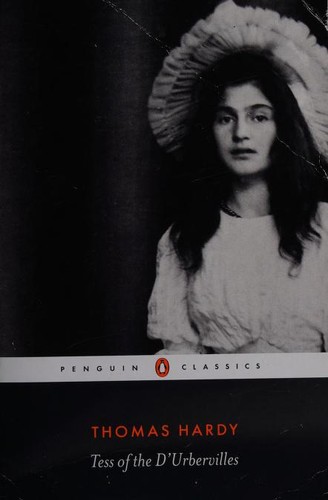
Talk to Tess of the d'Urbervilles like its author wrote you back.
Get the ideas that fit your life — not generic summaries.
- Chat with the book
- Audiobook-style main ideas
- Adapts to your life and goals
- Helps you take action
What it argues
Tess Durbeyfield, the eldest daughter of a poor Dorset family, is sent by her family to seek kinship with the wealthy d'Urbervilles — a family whose ancestral name her father has been told they share. What follows is the story of Tess's rape by Alec d'Urberville, her subsequent attempt to build a new life, her marriage to Angel Clare on the assumption that her past need not define her, Angel's rejection of her when he discovers her history, and the slow catastrophe that follows. Hardy subtitled the novel "A Pure Woman Faithfully Presented," and the subtitle is a polemic: Victorian society would not call Tess pure, and Hardy argues at length that it should.
The novel is a sustained indictment of the sexual double standard that held women responsible for violations committed against them while excusing the men who committed them. Hardy's case is built carefully: Alec is manipulative and eventually repentant in a way the novel treats with deliberate irony; Angel Clare, the liberal intellectual who loves Tess's purity in principle and abandons her for it in practice, is if anything judged more harshly. The gap between Angel's progressive ideals and his actual behavior is one of Hardy's sharpest observations about the Victorian moral imagination.
What it gets right
- 1.
Hardy's subtitle — 'A Pure Woman' — is a direct challenge to the social code that stripped purity from women based on what had been done to them rather than what they had done.
- 2.
Angel Clare is the novel's most damning portrait: a man who professes progressive principles and fails utterly to live by them when his own interests are involved.
- 3.
Alec d'Urberville's conversion is treated as morally dubious throughout — Hardy refuses to let religious repentance resolve what physical violation has set in motion.
What it covers
Who wrote it
Thomas Hardy (1840–1928) was an English novelist and poet born in Dorset, the rural county that forms the fictional "Wessex" of his novels. He trained as an architect before turning to writing, and his major novels — including Far from the Madding Crowd, The Return of the Native, The Mayor of Casterbridge, and Jude the Obscure — are studies of rural life under pressure from modernity, class, and fate. After Jude the Obscure was attacked for immorality, he stopped writing novels and spent the last thirty years of his life writing poetry. Tess of the d'Urbervilles, published in 1891, remains his most widely read novel.
