Talk to The Advantage like its author wrote you back.
Get the ideas that fit your life — not generic summaries.
- Chat with the book
- Audiobook-style main ideas
- Adapts to your life and goals
- Helps you take action
What it argues
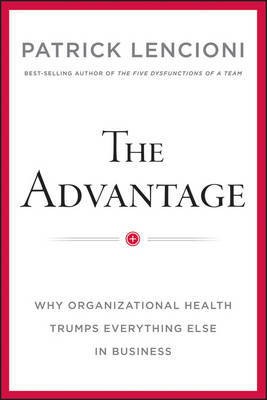
The Advantage is Patrick Lencioni's argument that organizational health — not strategy, technology, or talent — is the single greatest advantage a company can have. He defines organizational health as the condition where a leadership team is cohesive, has clarity about what they're doing and why, and communicates that clarity with over-the-top consistency throughout the organization. In healthy organizations, politics, confusion, and dysfunction are minimized — and that reduction is worth more than any management tactic or smart strategy.
Lencioni builds on his earlier work, particularly The Five Dysfunctions of a Team, by integrating the team model into a broader organizational framework. The book is organized around four disciplines: building a cohesive leadership team, creating clarity (answering six critical questions about the organization), over-communicating that clarity, and reinforcing clarity through human systems — hiring, performance management, and recognition. The first discipline is foundational; without a genuinely cohesive leadership team, the rest is impossible.
What it gets right
- 1.
Organizational health — cohesion, clarity, and consistent communication — is the greatest competitive advantage available to any organization and the most neglected.
- 2.
The four disciplines of organizational health: build a cohesive leadership team, create clarity, over-communicate clarity, and reinforce clarity through systems.
- 3.
A leadership team is not truly cohesive until members trust each other enough to engage in genuine unfiltered conflict about ideas — not artificial harmony.
What it covers
Who wrote it
Patrick Lencioni is the founder and president of The Table Group, a management consulting firm focused on organizational health and team dynamics. He is the author of twelve business books, most of them written as business fables, including The Five Dysfunctions of a Team, Death by Meeting, The Ideal Team Player, and Silos, Politics and Turf Wars. The Advantage is his most comprehensive non-fable work, synthesizing the frameworks from his earlier books into a single integrated model. His consulting clients include Fortune 500 companies, professional sports teams, and military organizations.
