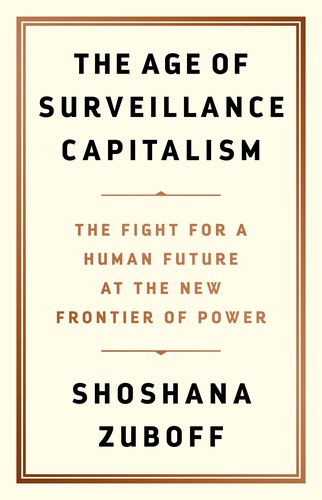
Talk to The Age of Surveillance Capitalism: The Fight for a Human Future at the New Frontier of Power like its author wrote you back.
Get the ideas that fit your life — not generic summaries.
- Chat with the book
- Audiobook-style main ideas
- Adapts to your life and goals
- Helps you take action
The Age of Surveillance Capitalism: The Fight for a Human Future at the New Frontier of Power, in detail
Shoshana Zuboff spent years researching what she calls surveillance capitalism — a new economic logic in which human experience is turned into raw material for prediction products that are sold to businesses wanting to influence behavior. The core mechanism is straightforward: Google and Facebook discovered that the behavioral data generated by their users was far more valuable as a prediction asset than as a means of improving services. The surplus data, left over from core operations, became the feedstock for advertising systems of unprecedented precision. Other industries followed.
Zuboff argues that this represents a mutation of capitalism, not a continuation of it. Previous industrial capitalism took nature as its raw material; surveillance capitalism takes human experience. The key move was claiming that behavioral data, which users generate but do not own, belongs by default to the platform. This claim was never subjected to democratic deliberation. It happened incrementally, in terms-of-service agreements, until it became so embedded that challenging it seemed absurd. Zuboff uses the word "expropriation" deliberately.
The second half of the book shifts from economic analysis to a theory of power. Zuboff identifies two new instruments: "tuning," which shapes the information environment to nudge behavior in particular directions, and "herding," which manipulates the physical and social context in real time. These instruments aim not just to predict behavior but to modify it at scale. She argues this constitutes a threat to autonomy and to the social conditions that make genuine selfhood possible — what she calls "the right to the future tense," meaning the capacity to author your own life rather than have it shaped by unseen algorithmic forces.
The book is long, dense, and often repetitive. Zuboff coins a great deal of new vocabulary, some of it useful and some of it overwrought. Her analysis of Google's foundational decisions is meticulous and well-documented. The normative claims in the second half are harder to evaluate and at times read more like a political manifesto than a scholarly argument. But as a diagnosis of the economic logic underlying the major tech platforms, it remains one of the most thorough accounts available, and its central claim — that behavioral surplus is extracted without consent and converted into instruments of influence — has not been substantially refuted.
The big ideas
- 1.
Surveillance capitalism claims human experience as free raw material for hidden commercial practices of extraction, prediction, and sales.
- 2.
Behavioral surplus — data beyond what is needed to improve services — is the core asset. Platforms discovered it accidentally and then industrialized it.
- 3.
The logic requires secrecy. If users understood what was being done with their behavioral data, they would resist. Opacity is a structural feature, not a bug.
