The Age of Surveillance Capitalism: The Fight for a Human Future at the New Frontier of Power by Shoshana Zuboff is a 2019 history book about surveillance, technology and power, behavioral data. Surveillance capitalism claims human experience as free raw material for hidden commercial practices of extraction, prediction, and sales.
Summary
Shoshana Zuboff spent years researching what she calls surveillance capitalism — a new economic logic in which human experience is turned into raw material for prediction products that are sold to businesses wanting to influence behavior. The core mechanism is straightforward: Google and Facebook discovered that the behavioral data generated by their users was far more valuable as a prediction asset than as a means of improving services. The surplus data, left over from core operations, became the feedstock for advertising systems of unprecedented precision. Other industries followed.
Zuboff argues that this represents a mutation of capitalism, not a continuation of it. Previous industrial capitalism took nature as its raw material; surveillance capitalism takes human experience. The key move was claiming that behavioral data, which users generate but do not own, belongs by default to the platform. This claim was never subjected to democratic deliberation. It happened incrementally, in terms-of-service agreements, until it became so embedded that challenging it seemed absurd. Zuboff uses the word "expropriation" deliberately.
The second half of the book shifts from economic analysis to a theory of power. Zuboff identifies two new instruments: "tuning," which shapes the information environment to nudge behavior in particular directions, and "herding," which manipulates the physical and social context in real time. These instruments aim not just to predict behavior but to modify it at scale. She argues this constitutes a threat to autonomy and to the social conditions that make genuine selfhood possible — what she calls "the right to the future tense," meaning the capacity to author your own life rather than have it shaped by unseen algorithmic forces.
The book is long, dense, and often repetitive. Zuboff coins a great deal of new vocabulary, some of it useful and some of it overwrought. Her analysis of Google's foundational decisions is meticulous and well-documented. The normative claims in the second half are harder to evaluate and at times read more like a political manifesto than a scholarly argument. But as a diagnosis of the economic logic underlying the major tech platforms, it remains one of the most thorough accounts available, and its central claim — that behavioral surplus is extracted without consent and converted into instruments of influence — has not been substantially refuted.
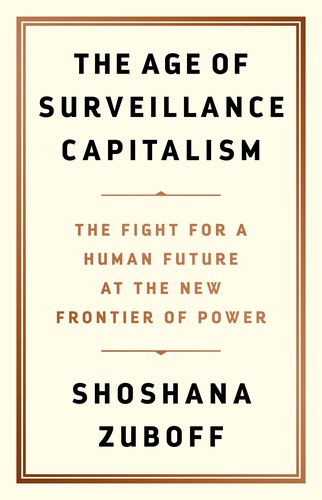
Talk to The Age of Surveillance Capitalism: The Fight for a Human Future at the New Frontier of Power like its author wrote you back.
Get the ideas that fit your life — not generic summaries.
- Chat with the book
- Audiobook-style main ideas
- Adapts to your life and goals
- Helps you take action
Key takeaways
- 1.
Surveillance capitalism claims human experience as free raw material for hidden commercial practices of extraction, prediction, and sales.
- 2.
Behavioral surplus — data beyond what is needed to improve services — is the core asset. Platforms discovered it accidentally and then industrialized it.
- 3.
The logic requires secrecy. If users understood what was being done with their behavioral data, they would resist. Opacity is a structural feature, not a bug.
- 4.
Prediction products sold to advertisers don't just predict behavior — the most advanced systems aim to modify it, narrowing the gap between prediction and certainty.
- 5.
Zuboff's concept of 'instrumentarian power' differs from surveillance in the authoritarian sense: it doesn't threaten punishment, it shapes behavior by shaping context.
- 6.
The expansion from online data collection to smart homes, wearables, and urban infrastructure means physical space itself becomes a site of behavioral extraction.
- 7.
Democratic deliberation never approved this system. It accumulated through contract law and regulatory inaction while the scale made it feel inevitable.
- 8.
Zuboff argues the right to the future tense — to make one's own choices without algorithmic preemption — is a precondition for meaningful selfhood.
Discussion questions
Use these on your own, with a book club, or as chat starters in Superbook. Book club version, ready to copy or print →
- 1.
Zuboff says surveillance capitalism was not inevitable but resulted from specific decisions at specific companies. Does that framing change how you think about accountability?
- 2.
Which of the behavioral extraction practices Zuboff describes did you find most surprising, and why?
- 3.
She distinguishes between surveillance capitalism and a surveillance state. Are those threats separable in practice, or do they reinforce each other?
- 4.
Zuboff's prescription is fundamentally political: democratic deliberation over data rights. What would that process actually look like?
- 5.
Is the personalization you get from platforms worth the behavioral data you provide? How do you weigh that tradeoff?
- 6.
The book argues that surveillance capitalism poses a threat to human autonomy at a fundamental level. Do you find that argument convincing, or does it overstate the case?
- 7.
Zuboff coined the term 'surveillance capitalism' in 2014. Five years later she published this book. How has the landscape changed since then, and in which directions?
- 8.
She argues that regulation alone cannot fix the problem because the entire business model depends on the practices she describes. What would a structural alternative look like?
- 9.
Many people accept data extraction in exchange for free services. Is this a legitimate bargain, or is Zuboff right that meaningful consent is structurally impossible?
- 10.
The book focuses primarily on Google and Facebook. How does her framework apply to Amazon, Apple, or TikTok?
- 11.
What specific change in your own digital behavior, if any, has your reading of surveillance capitalism research prompted?
- 12.
Zuboff's writing is dense and sometimes repetitive. Did the length serve the argument or undermine it?
Themes
Frequently asked questions
-
Is The Age of Surveillance Capitalism worth reading?
Yes, with caveats. The first half — the economic history of how behavioral surplus became a business model — is thorough and well-sourced. The second half, dealing with power and autonomy, is more speculative and repetitive. At 700 pages, most readers benefit from focusing on the first half and the conclusion.
-
How long does it take to read The Age of Surveillance Capitalism?
Roughly 15 to 17 hours for the full book at average reading pace. It is unusually long for a trade nonfiction book. Many readers report reading it in sections over several weeks.
-
What does Zuboff mean by behavioral surplus?
The data generated by users that exceeds what is needed to deliver the core service. When you search, Google needs to return results. The behavioral residue — how long you hovered, what you clicked next, your location — is surplus. Zuboff argues that claiming this surplus without consent is the foundational act of surveillance capitalism.
-
Who should read this book?
Anyone trying to understand the economic foundations of the major tech platforms, the structure of modern advertising, or the policy debates around data rights and privacy. It is particularly useful for those in policy, journalism, or product design who want a systematic framework for thinking about data.
-
What is Zuboff's proposed solution?
She argues for a political and democratic response: new rights over behavioral data, prohibitions on certain prediction products, and antitrust action to break up the structures that make the logic self-perpetuating. She is explicit that individual privacy choices cannot fix a systemic problem.
Similar books
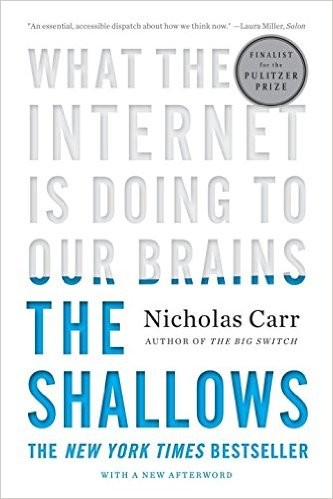
The Shallows: What the Internet Is Doing to Our Brains
Nicholas Carr
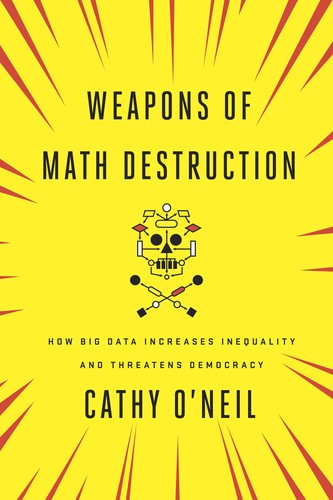
Weapons of Math Destruction
Cathy O'Neil

Homo Deus: A Brief History of Tomorrow
Yuval Noah Harari
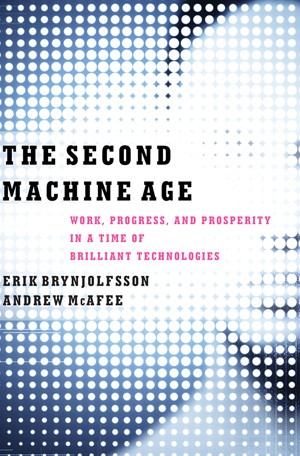
The Second Machine Age
Erik Brynjolfsson and Andrew McAfee
