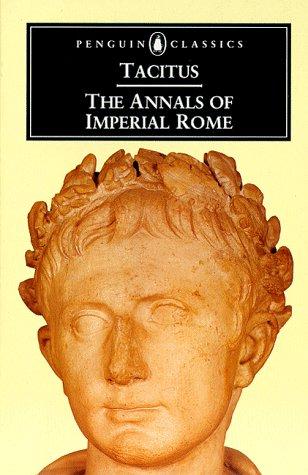
Talk to Annals of Imperial Rome like its author wrote you back.
Get the ideas that fit your life — not generic summaries.
- Chat with the book
- Audiobook-style main ideas
- Adapts to your life and goals
- Helps you take action
Annals of Imperial Rome, in detail
Tacitus wrote the Annals in the early second century CE as a history of Rome from the death of Augustus to the death of Nero — the reigns of Tiberius, Caligula, Claudius, and Nero, covering roughly 14 to 68 CE. It is the most sustained analysis of autocracy produced in the ancient world: how tyranny is established, how it corrupts both rulers and those who serve them, how the senatorial class learns to participate in its own subjugation, and how the language of the republic is preserved as a fiction while its substance is hollowed out.
The portrait of Tiberius is the center of the work. Tacitus presents a man of genuine ability who becomes progressively more suspicious, more cruel, and more isolated as power removes him from accountability. The informer system — where citizens denounce one another for treason charges — is treated as both a symptom and an accelerant of tyranny. The Praetorian prefect Sejanus, who manipulates Tiberius from behind the scenes, is a study in how autocracy creates the conditions for the very conspiracies it fears.
The famous opening declaration — that Tacitus will write "without indignation and without partiality" — is ironic. The work is saturated with bitter irony, compressed judgments, and devastating characterizations delivered with a stylistic economy that makes Latin students feel simultaneously inadequate and grateful. The account of Caligula survives only in fragments. Claudius is treated with the particular contempt of a senator for an emperor who relied on freedmen. Nero's reign, which ends the surviving portions, moves from promise to theatrical excess to paranoia to the Great Fire.
The Annals is not a comfortable read. It is a sustained argument that power degrades, that courts produce sycophants, that senatorial dignity is mostly performance, and that the choice available to most people under autocracy is collaboration or silence — with resistance a luxury available only to those willing to die. Its relevance is not historical.
The big ideas
- 1.
Autocracy does not arrive as a frontal assault. It is built incrementally, with legal forms preserved while their substance is destroyed, so that each step looks like a small adjustment.
- 2.
The informer system — where citizens profit from denouncing others for treason — is the mechanism by which autocracy makes the population complicit in its own oppression.
- 3.
Tiberius' reign illustrates how power and isolation reinforce each other: the more a ruler fears conspiracy, the fewer honest advisers reach him, and the more likely he is to produce the very conspiracies he fears.
