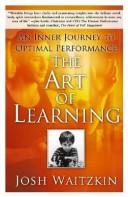
Talk to The Art of Learning like its author wrote you back.
Get the ideas that fit your life — not generic summaries.
- Chat with the book
- Audiobook-style main ideas
- Adapts to your life and goals
- Helps you take action
What it argues
The Art of Learning is Josh Waitzkin's account of how he became a national chess champion as a child and later a world-champion martial artist, and what those two very different disciplines taught him about the structure of high performance. The book is part memoir and part practical framework, moving between Waitzkin's own story and the principles he extracted from it.
The framework is organized around a few core ideas. The most important is the distinction between entity theorists and incremental theorists — borrowed from Carol Dweck's research, though Waitzkin developed parallel insights independently through practice. Entity theorists believe talent is fixed; incremental theorists believe it grows through effort. Waitzkin argues that every competitive environment weeds out entity thinking over time, because the entity theorist collapses when they lose and the incrementalist recovers. This plays out across both his chess career and his transition to tai chi and push hands.
What it gets right
- 1.
Entity theorists believe intelligence and talent are fixed. Incremental theorists believe they grow with effort. The entity mindset collapses under adversity; the incremental mindset feeds on it.
- 2.
Making smaller circles means compressing large techniques into the smallest possible triggers. Experts don't think through principles in the moment; they've practiced until the right response fires automatically.
- 3.
Building a trigger for peak performance is a trainable skill. Waitzkin describes building specific pre-performance routines that reliably produce his optimal competitive state.
What it covers
Who wrote it
Josh Waitzkin is an American chess prodigy turned martial arts champion. He became a national chess master at age sixteen and was an eight-time national scholastic chess champion — his early chess career inspired the film Searching for Bobby Fischer, based on his father Fred Waitzkin's book. In his twenties he turned to tai chi chuan and push hands competition, winning multiple world championship titles. He now works as a performance coach and has developed methods for training elite performers in high-stakes fields including finance, special operations, and athletics.
