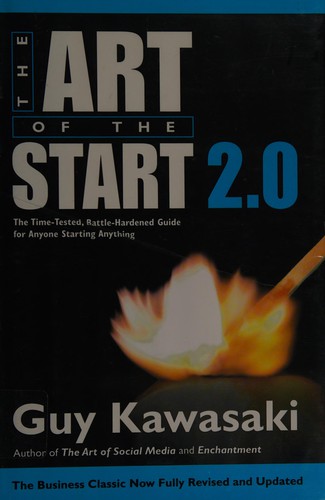
Talk to The Art of the Start 2.0 like its author wrote you back.
Get the ideas that fit your life — not generic summaries.
- Chat with the book
- Audiobook-style main ideas
- Adapts to your life and goals
- Helps you take action
The Art of the Start 2.0, in detail
The Art of the Start 2.0 is Guy Kawasaki's updated guide to launching a company, product, or movement. The original came out in 2004 when Kawasaki was still best known as Apple's original software evangelist. The 2015 revision updates the startup landscape to include social media, crowdfunding, and a post-iPhone product environment. The core advice, though, remains the same: start making something, figure out the pitch, and don't wait until everything is perfect.
Kawasaki's approach is organized around the stages of a startup: defining a meaningful reason to exist beyond money, building a team, crafting a pitch, fundraising, and scaling. His pitch framework is the 10/20/30 rule — ten slides, twenty minutes, thirty-point font — which has circulated independently of the book and has become something of a standard. The underlying principle is that investors are trying to disqualify you as fast as possible, so clarity and brevity work in your favor.
The book is useful and occasionally dated in the same paragraph. Kawasaki is a gifted aphorist and the writing moves quickly. Advice like "don't let the bozos grind you down" and "prototype early, test with real customers, ignore most feedback" holds up. Some of the social media advice, especially on platform-specific tactics, has aged poorly in the decade since publication.
What distinguishes The Art of the Start from most startup books is its directness about what founders actually need to do, not what they should think about. Kawasaki is not interested in the philosophical dimensions of entrepreneurship. He wants you to write the pitch deck, find the first ten customers, and start. That focus makes the book practical and occasionally shallow — it's stronger on execution than on helping founders decide whether their idea is worth executing at all.
The big ideas
- 1.
Start with a meaningful reason to exist beyond profit. Companies that articulate a clear mission attract better employees, inspire customer loyalty, and make harder decisions more easily.
- 2.
The 10/20/30 rule for pitches: ten slides, twenty minutes, thirty-point font minimum. Most pitch decks are too long, too detailed, and too small to read under pressure.
- 3.
Launch before you're ready. Imperfect products in the market generate feedback that no internal review will surface. Waiting for perfection typically means waiting forever.
