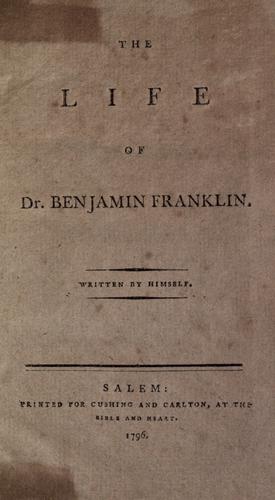
Talk to The Autobiography of Benjamin Franklin like its author wrote you back.
Get the ideas that fit your life — not generic summaries.
- Chat with the book
- Audiobook-style main ideas
- Adapts to your life and goals
- Helps you take action
The Autobiography of Benjamin Franklin, in detail
Benjamin Franklin's autobiography is one of the earliest and most influential self-improvement texts in American literature, written in four separate parts across the last decades of his life. Franklin intended it as a letter of practical guidance to his son, but it became something broader: a template for the idea that a person could, through deliberate effort and social intelligence, rise from modest origins to real influence and prosperity. He grew up the fifteenth of seventeen children, left school at ten, escaped a stifling apprenticeship to his brother, and arrived in Philadelphia at seventeen with almost nothing. By middle age he had become the most famous scientist in the world and a central figure in American politics.
The most discussed section is Franklin's project of moral perfection, in which he identified thirteen virtues — temperance, silence, order, resolution, frugality, industry, sincerity, justice, moderation, cleanliness, tranquility, chastity, and humility — and systematically tracked his performance in a small notebook, rotating focus from one virtue to the next on a thirteen-week cycle. He was honest about the results: he never achieved perfection in all of them simultaneously, and found order and humility the hardest to hold. But he maintained that the attempt itself produced gains. The project is one of the earliest documented examples of deliberate self-tracking as a personal discipline.
Franklin's account of his business and civic life is equally instructive. He describes how he cultivated a reputation for hard work by being seen to work hard, how he used the lending of a book to turn an enemy into an ally (a technique now called the Franklin Effect), and how he launched the first subscription library, fire brigade, and public hospital in Philadelphia through voluntary association rather than government mandate. His approach to persuasion was almost always indirect: he rarely asserted positions flatly, preferring questions and the Socratic method to avoid triggering resistance.
The autobiography is unfinished; Franklin died in 1790 before completing the fourth part, so the account ends well before the Revolution and his years in Paris. What remains is still essential reading — not because Franklin was a saint (he was a hypocrite on slavery, an absent father, and a relentless self-promoter) but because the book captures the logic of a particular kind of mind: practical, restless, convinced that problems could be solved and institutions could be built by individuals who were willing to show up and do the work.
The big ideas
- 1.
Franklin's thirteen virtues project — a thirteen-week rotating focus on one virtue at a time — is one of the earliest documented systems of deliberate self-improvement through tracking.
- 2.
Reputation is partly constructed. Franklin was careful to be seen working by neighbors and to be seen arriving early and leaving late. Perception and reality reinforced each other.
- 3.
The Franklin Effect: if you want to win over an adversary, ask them for a small favor rather than doing one for them. Having helped you, they unconsciously decide they must like you.
