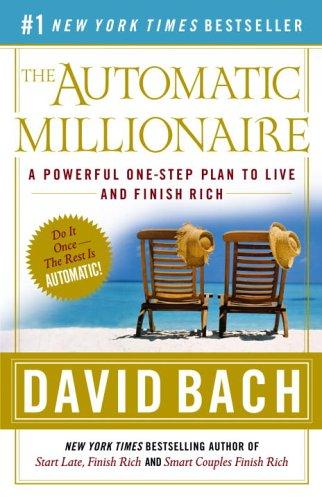
Talk to The Automatic Millionaire like its author wrote you back.
Get the ideas that fit your life — not generic summaries.
- Chat with the book
- Audiobook-style main ideas
- Adapts to your life and goals
- Helps you take action
The Automatic Millionaire, in detail
The Automatic Millionaire is David Bach's argument that the secret to building wealth is not discipline or budgeting but automation — setting up financial systems that do the right thing without requiring ongoing willpower. Bach opens with the story of a couple, the McIntyres, who worked blue-collar jobs, earned modest incomes, and retired with more than a million dollars in assets and a paid-off home. Their secret: they automated every aspect of their savings, never touched the money, and let time do the rest.
The core concept is "pay yourself first," automated so it happens without any active decision-making. Set up your 401(k) contribution to the maximum (or at least the employer match) before you ever see the money. Set up automatic transfers to IRAs and savings accounts on payday. Set up automatic bill payments. The goal is a financial system that runs itself, so that the right financial behaviors happen in the background while you live your life.
Bach introduces his concept of the "Latte Factor" — the small daily purchases (coffee, lunch out, cigarettes) that add up to surprising sums over years. He calculates that five dollars a day invested at historical stock market returns becomes a substantial sum over decades. This concept has attracted controversy: critics argue that it misidentifies the problem (income and housing costs matter far more than small daily expenses) and moralizes about spending choices. Bach's response is that any recurring expense that can be redirected to savings, however small, illustrates the power of compounding — it's not specifically about coffee.
The homeownership section is central to Bach's philosophy and has aged less well. He argues that owning a home and paying it down is a fundamental wealth-building strategy, using the equity as a forced savings mechanism. Post-2008, this claim requires more nuance — homeownership carries risks and transaction costs that Bach underweights, and the comparison to renting-and-investing depends heavily on local market conditions. The automation framework, however, remains as relevant as when the book was written.
The big ideas
- 1.
Automation beats willpower. Set up your savings and investments to happen automatically, before you have the chance to spend the money, and you will save more than you would through any budget.
- 2.
Pay yourself first: the first transfer on payday should be to your savings and retirement accounts, not to expenses. This single habit, automated, produces wealth over time.
- 3.
The Latte Factor illustrates that small recurring expenses, redirected to investment, can compound to significant sums. The concept is about redirecting money you spend without thinking, not specifically about coffee.
