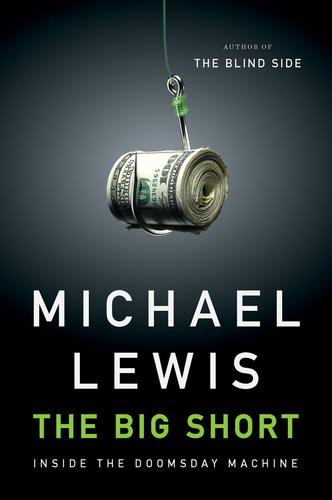
Talk to The Big Short: Inside the Doomsday Machine like its author wrote you back.
Get the ideas that fit your life — not generic summaries.
- Chat with the book
- Audiobook-style main ideas
- Adapts to your life and goals
- Helps you take action
What it argues
The Big Short is Michael Lewis's account of the 2008 financial crisis as seen through the eyes of a handful of contrarians who saw the collapse coming, bet against the American housing market, and were right. Lewis structures the book around three groups of outsiders: Steve Eisman, an abrasive hedge fund manager who trusted almost no one on Wall Street; Michael Burry, a one-eyed physician turned investor who read the fine print on mortgage bonds when no one else would; and a pair of young traders at a garage-band firm called Cornwall Capital who used long-shot options to build a fortune from the rubble. What connects them is that they did the work everyone else had stopped doing.
The machinery Lewis exposes is genuinely strange. The housing boom was not simply a case of greedy banks lending to bad borrowers. It was a system in which subprime mortgages were sliced, repackaged, and sold on as bonds, then repackaged again into collateralized debt obligations, which were then insured by credit default swaps — instruments so opaque that even the people trading them had lost track of what they owned. Rating agencies gave these products triple-A ratings they did not deserve, banks held large positions they did not understand, and regulators were either captured or simply overwhelmed. Lewis's greatest achievement is making this legible without dumbing it down.
What it gets right
- 1.
The 2008 crisis was not just a housing bubble but a cascade failure in structured finance: mortgages were packaged into bonds, bonds into CDOs, and CDOs insured by credit default swaps, compounding risk at every level.
- 2.
The people who saw the collapse coming were outsiders who bothered to read the underlying loan documents. What they found — teaser rates, no-documentation loans, borrowers with no income — was hiding in plain sight.
- 3.
Incentive structures drove the disaster. Loan originators sold risk to banks, banks sold it to investors, traders were paid on annual book value, and no one at any point in the chain bore the long-term consequences.
What it covers
Who wrote it
Michael Lewis is an American financial journalist and author whose books have sold tens of millions of copies worldwide. He began his career as a bond salesman at Salomon Brothers in the 1980s, an experience he documented in Liar's Poker. His subsequent books cover wildly varied subjects — baseball analytics in Moneyball, the science of decision-making in The Undoing Project, the hidden work of government in The Fifth Risk — but each applies the same approach: find an unusual character deep inside a complex system and let their story illuminate how the system actually works. Lewis lives in Berkeley, California, and writes for Vanity Fair and other publications.
