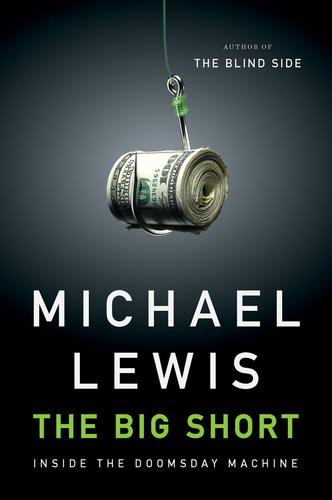
The Big Short: Inside the Doomsday Machine by Michael Lewis is a 2010 economics book about financial crisis, wall street, risk. The 2008 crisis was not just a housing bubble but a cascade failure in structured finance: mortgages were packaged into bonds, bonds into CDOs, and CDOs insured by credit default swaps, compounding risk at every level.
Summary
The Big Short is Michael Lewis's account of the 2008 financial crisis as seen through the eyes of a handful of contrarians who saw the collapse coming, bet against the American housing market, and were right. Lewis structures the book around three groups of outsiders: Steve Eisman, an abrasive hedge fund manager who trusted almost no one on Wall Street; Michael Burry, a one-eyed physician turned investor who read the fine print on mortgage bonds when no one else would; and a pair of young traders at a garage-band firm called Cornwall Capital who used long-shot options to build a fortune from the rubble. What connects them is that they did the work everyone else had stopped doing.
The machinery Lewis exposes is genuinely strange. The housing boom was not simply a case of greedy banks lending to bad borrowers. It was a system in which subprime mortgages were sliced, repackaged, and sold on as bonds, then repackaged again into collateralized debt obligations, which were then insured by credit default swaps — instruments so opaque that even the people trading them had lost track of what they owned. Rating agencies gave these products triple-A ratings they did not deserve, banks held large positions they did not understand, and regulators were either captured or simply overwhelmed. Lewis's greatest achievement is making this legible without dumbing it down.
The moral argument running underneath the book is less about villainy than about structural rot. A few individuals were cynical and predatory. Most were operating inside a system whose incentives rewarded volume over due diligence, short-term revenue over long-term survival. Traders were paid in annual bonuses, not the eventual outcome of their bets. The people who had the most information about the quality of the loans — the originators — had already sold the risk to someone else. Lewis shows how a system designed that way will tend toward disaster regardless of the intentions of the individuals inside it.
Lewis is a committed entertainer as well as a reporter, and some critics have noted that the protagonists come across almost too heroic: the lone wolves who saw what the crowd missed. The book does not dwell on the millions of ordinary homeowners who lost their houses, or the deeper political economy that produced deregulation in the first place. What it does exceptionally well is turn a genuinely confusing financial catastrophe into a story with characters, momentum, and a sense of moral clarity about who was paying attention and who wasn't. For readers who want to understand how the crisis happened and why it wasn't stopped, it remains the most readable account written.
Talk to The Big Short: Inside the Doomsday Machine like its author wrote you back.
Get the ideas that fit your life — not generic summaries.
- Chat with the book
- Audiobook-style main ideas
- Adapts to your life and goals
- Helps you take action
Key takeaways
- 1.
The 2008 crisis was not just a housing bubble but a cascade failure in structured finance: mortgages were packaged into bonds, bonds into CDOs, and CDOs insured by credit default swaps, compounding risk at every level.
- 2.
The people who saw the collapse coming were outsiders who bothered to read the underlying loan documents. What they found — teaser rates, no-documentation loans, borrowers with no income — was hiding in plain sight.
- 3.
Incentive structures drove the disaster. Loan originators sold risk to banks, banks sold it to investors, traders were paid on annual book value, and no one at any point in the chain bore the long-term consequences.
- 4.
Rating agencies failed catastrophically. Moody's and S&P gave triple-A ratings to mortgage bonds backed by subprime loans, partly because the banks that created the bonds were also the agencies' paying customers.
- 5.
A credit default swap is a form of insurance you can buy on a bond you don't own. This meant investors could bet against the housing market in virtually unlimited size, and a small group did exactly that.
- 6.
The banks' own risk managers were often sidelined or ignored. When Bear Stearns and Lehman collapsed, they held positions their own executives didn't fully understand.
- 7.
The crisis exposed a deeper problem: financial complexity had outrun the ability of regulators, executives, and even traders to understand what they owned. Opacity was not accidental; it was profitable.
- 8.
The short sellers who profited from the crisis felt no triumph. They had bet correctly but they had also bet on a disaster that caused immense human suffering, and the banks were bailed out while homeowners were not.
Discussion questions
Use these on your own, with a book club, or as chat starters in Superbook. Book club version, ready to copy or print →
- 1.
Lewis focuses on outsider figures who defied the consensus. What does it actually take to act against an overwhelming expert consensus when the stakes are high?
- 2.
The rating agencies gave triple-A ratings to bonds they didn't fully understand. What institutional pressures — beyond simple corruption — explain how that happened?
- 3.
Eisman, Burry, and the Cornwall Capital traders all had unusual personalities. Lewis implies that contrarianism and social alienation were almost prerequisites for seeing clearly. Do you buy that argument?
- 4.
Who bears the most moral responsibility for the crisis — the bankers who structured the deals, the regulators who missed it, the politicians who deregulated, or the homeowners who took on loans they couldn't service?
- 5.
Lewis largely tells the story through the people who profited. How does that choice shape the moral weight of the book?
- 6.
The people at the bottom of the mortgage chain — originators at places like Long Beach Savings — were incentivized to make as many loans as possible and sell them quickly. What would it take to redesign that incentive structure?
- 7.
Michael Burry spotted the problem by reading hundreds of mortgage prospectuses cover to cover. Where in your own work or life do you avoid reading the fine print, and what are the potential consequences?
- 8.
The crisis required many people to act against their own short-term interests in order to be stopped. Why is collective action so hard when the costs of inaction are spread across millions and the gains from recklessness are concentrated?
- 9.
Lewis's short sellers made fortunes while millions lost homes. Can a bet that correctly anticipates harm be morally neutral, or does profiting from catastrophe carry its own obligations?
- 10.
The big banks were bailed out. The homeowners were not. Does that asymmetry reflect a policy failure, a political failure, or something structural about how modern finance intersects with government?
- 11.
Fifteen years after the crisis, how much has actually changed in how mortgage-backed securities are rated, sold, and regulated?
- 12.
What does The Big Short suggest about the relationship between financial complexity and democratic accountability? Can voters or legislators meaningfully oversee a system this opaque?
Themes
Frequently asked questions
-
What is The Big Short actually about?
It's about the small group of investors who saw the collapse of the US housing market coming before 2008 and figured out how to bet against it. Lewis uses their stories to explain how mortgage-backed securities, CDOs, and credit default swaps worked — and why the system was fragile enough to bring down the global economy.
-
Do I need a finance background to understand The Big Short?
No. Lewis is a gifted explainer and deliberately builds up the concepts from scratch. Some of the structured finance mechanics take concentration, but the character-driven structure carries you through the harder material. Most readers with no finance background report finding it clear and gripping.
-
How long is The Big Short?
Around 265 pages, or roughly five to six hours at average reading pace. The chapter structure is tight and the pacing is fast for a book about bond markets. It reads more like a thriller than a business book.
-
Is The Big Short accurate?
Lewis is a journalist, not an academic, and the book takes some liberties with characterization and narrative framing. Several people portrayed in the book have disputed specific details. As a portrait of how the crisis felt from inside a small group of contrarian traders, it is compelling; as a comprehensive account of all causes and actors, it has real gaps — particularly around the political economy of deregulation.
-
Who should read The Big Short?
Anyone who wants to understand the 2008 crisis beyond headlines, and anyone interested in how complex systems fail. It rewards readers curious about incentive design, financial regulation, and the psychology of crowd behavior. If you want the full policy picture, pair it with something like Carmen Reinhart's academic work, but as a starting point it's hard to beat.
Similar books
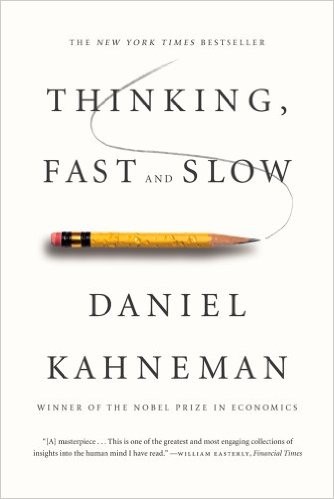
Thinking, Fast and Slow
Daniel Kahneman
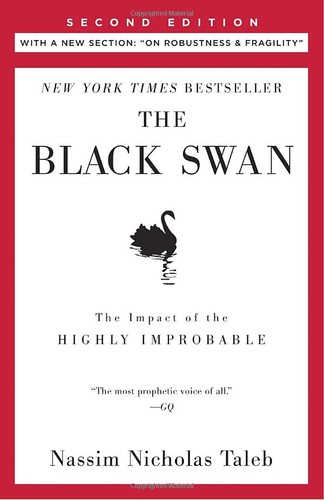
The Black Swan: The Impact of the Highly Improbable
Nassim Nicholas Taleb
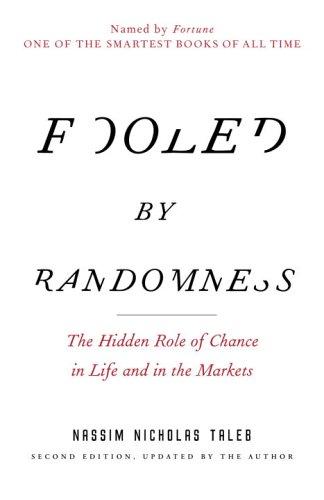
Fooled by Randomness
Nassim Nicholas Taleb
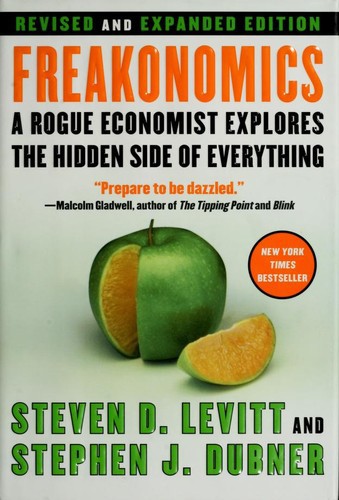
Freakonomics
Steven D. Levitt and Stephen J. Dubner
