Talk to The Bluest Eye like its author wrote you back.
Get the ideas that fit your life — not generic summaries.
- Chat with the book
- Audiobook-style main ideas
- Adapts to your life and goals
- Helps you take action
The Bluest Eye, in detail
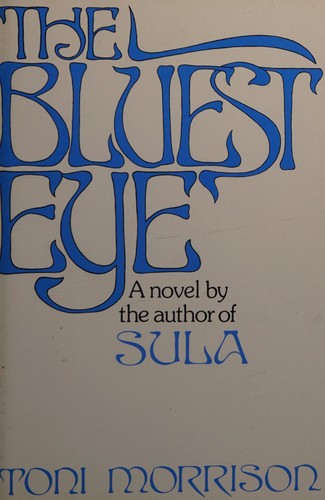
Toni Morrison's first novel, published in 1970, is set in Lorain, Ohio in 1940–41 and follows Pecola Breedlove, an eleven-year-old Black girl who has internalized the conviction that she is ugly — that beauty means whiteness, means blue eyes — and whose desire for blue eyes becomes the central image of a novel about what racism does to the interior life of children. Morrison was thirty-nine when the book was published, and it remains one of the most formally daring and psychologically penetrating first novels in American literature.
The structure is unconventional. Morrison opens with a passage from a Dick-and-Jane primer — the sanitized, white, middle-class domestic world that saturated American culture — and then progressively breaks it down, running the words together, removing the spaces, until it is typographically disordered. This is not decoration: the fractured primer mirrors the fractured family structures and psychic lives the novel describes. The narrative is told through multiple perspectives — the young Claudia MacTeer, who is close to Pecola's age but has a family capable of protecting her; Claudia's sister Frieda; and an omniscient narrator who provides context that the children cannot — and moves back and forth in time.
Morrison does not allow the story to be a simple indictment. She gives full interiority to Cholly Breedlove, Pecola's father, whose violence is traced to its roots in his own humiliation and damage — a generosity of vision that is among the novel's most difficult achievements. This is not exculpation but comprehension: Morrison shows the chain of destruction that runs through a community shaped by poverty and racism, and asks the reader to hold both the horror of what happened and the humanity of everyone involved.
The Bluest Eye is a short book that takes time to absorb. Morrison's prose is dense, allusive, and occasionally difficult — she demands that readers pay attention to language in a way that realistic fiction often doesn't. But the difficulty is purposeful: the novel is formally enacting what it is saying about the violence of assimilation and the cost of internalized standards of beauty. It is one of the foundational texts of contemporary American literature and one of the most precisely constructed novels of its era.
The big ideas
- 1.
The desire for blue eyes is Pecola's way of articulating a wish to be recognized as beautiful and therefore human — in the cultural logic of 1940s America, beauty was white, and ugliness was Black.
- 2.
Morrison's fractured Dick-and-Jane primer is a structural statement: the pristine domestic ideal of white middle-class culture, when broken apart, reveals the violence it conceals.
- 3.
The novel refuses the comfortable structure of a story about villains and victims — it traces the damage in Cholly Breedlove back through his own history, making the reader hold both cruelty and its origins simultaneously.
