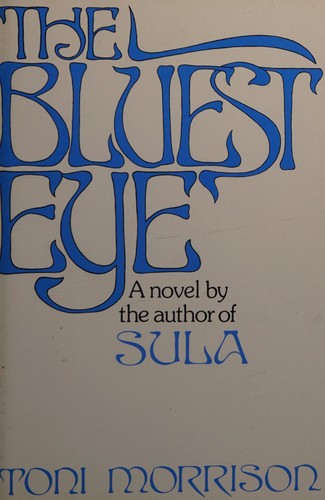
The Bluest Eye by Toni Morrison is a 1970 history book about race and beauty standards, childhood and trauma, self-hatred and identity. The desire for blue eyes is Pecola's way of articulating a wish to be recognized as beautiful and therefore human — in the cultural logic of 1940s America, beauty was white, and ugliness was Black.
Summary
Toni Morrison's first novel, published in 1970, is set in Lorain, Ohio in 1940–41 and follows Pecola Breedlove, an eleven-year-old Black girl who has internalized the conviction that she is ugly — that beauty means whiteness, means blue eyes — and whose desire for blue eyes becomes the central image of a novel about what racism does to the interior life of children. Morrison was thirty-nine when the book was published, and it remains one of the most formally daring and psychologically penetrating first novels in American literature.
The structure is unconventional. Morrison opens with a passage from a Dick-and-Jane primer — the sanitized, white, middle-class domestic world that saturated American culture — and then progressively breaks it down, running the words together, removing the spaces, until it is typographically disordered. This is not decoration: the fractured primer mirrors the fractured family structures and psychic lives the novel describes. The narrative is told through multiple perspectives — the young Claudia MacTeer, who is close to Pecola's age but has a family capable of protecting her; Claudia's sister Frieda; and an omniscient narrator who provides context that the children cannot — and moves back and forth in time.
Morrison does not allow the story to be a simple indictment. She gives full interiority to Cholly Breedlove, Pecola's father, whose violence is traced to its roots in his own humiliation and damage — a generosity of vision that is among the novel's most difficult achievements. This is not exculpation but comprehension: Morrison shows the chain of destruction that runs through a community shaped by poverty and racism, and asks the reader to hold both the horror of what happened and the humanity of everyone involved.
The Bluest Eye is a short book that takes time to absorb. Morrison's prose is dense, allusive, and occasionally difficult — she demands that readers pay attention to language in a way that realistic fiction often doesn't. But the difficulty is purposeful: the novel is formally enacting what it is saying about the violence of assimilation and the cost of internalized standards of beauty. It is one of the foundational texts of contemporary American literature and one of the most precisely constructed novels of its era.
Talk to The Bluest Eye like its author wrote you back.
Get the ideas that fit your life — not generic summaries.
- Chat with the book
- Audiobook-style main ideas
- Adapts to your life and goals
- Helps you take action
Key takeaways
- 1.
The desire for blue eyes is Pecola's way of articulating a wish to be recognized as beautiful and therefore human — in the cultural logic of 1940s America, beauty was white, and ugliness was Black.
- 2.
Morrison's fractured Dick-and-Jane primer is a structural statement: the pristine domestic ideal of white middle-class culture, when broken apart, reveals the violence it conceals.
- 3.
The novel refuses the comfortable structure of a story about villains and victims — it traces the damage in Cholly Breedlove back through his own history, making the reader hold both cruelty and its origins simultaneously.
- 4.
Claudia MacTeer, the narrator, represents a different possibility: a Black child who can reject the white beauty standard, at least partially, because her family provides some protection against the culture's verdict.
- 5.
Morrison is interested in what racism does to communities, not just to individuals — the social cruelty between Pecola and the other Black children in Lorain is as important as the external racism.
- 6.
The novel is formally ambitious: time shifts, multiple narrators, embedded documents, and fractured typography all serve the argument about the fractured interior lives of people under systemic pressure.
- 7.
Morrison said later that she wrote the book because she had never seen this story told — the story of a Black girl who had been convinced she was ugly — and believed its absence from literature was itself a form of violence.
Discussion questions
Use these on your own, with a book club, or as chat starters in Superbook. Book club version, ready to copy or print →
- 1.
Morrison structures the novel around an eleven-year-old's wish for blue eyes. What does that image make visible about how racial hierarchy is internalized by children?
- 2.
The Dick-and-Jane primer appears three times: intact, compressed, and broken. What does Morrison accomplish with that formal device that straightforward narrative couldn't?
- 3.
Claudia's response to white baby dolls — her desire to destroy them — is presented as healthy rather than pathological. Is that a persuasive reading? What does it say about her relationship to the beauty standard?
- 4.
Morrison gives Cholly Breedlove an interiority and a history that explain his actions without excusing them. How does that choice affect the reader's experience of the novel? Is it successful?
- 5.
The community's cruelty toward Pecola — including from other Black characters — is as damaging as white racism in the novel. What is Morrison saying about how oppression circulates within communities?
- 6.
The omniscient narrator knows things that the child narrators Claudia and Frieda cannot know. What does that shift in perspective allow Morrison to do? What does it cost the narrative in terms of immediacy?
- 7.
The novel was published in 1970. Morrison had trouble finding a publisher and the book sold poorly initially. What does that history tell us about who was imagined as the audience for serious literary fiction in 1970?
- 8.
Pecola's madness at the end of the novel is both a mercy and a condemnation. How does Morrison ask you to feel about it?
- 9.
Morrison said the absence of this story from literature was itself violent — that the invisibility of the Black girls it depicts was a form of erasure. Is that an argument about what fiction is obligated to represent?
- 10.
The novel is set in 1940–41, but Morrison wrote it in 1970, after the civil rights movement. How does that temporal gap shape the book's perspective?
- 11.
The Bluest Eye is often taught in high school and has been repeatedly challenged and banned. What are the arguments for and against teaching it to adolescents?
- 12.
Morrison's prose is demanding — allusive, indirect, formally complex. Is that difficulty justified by what it achieves? Does literary difficulty ever become an obstacle to the work's social purpose?
Themes
Frequently asked questions
-
What is The Bluest Eye about?
It follows Pecola Breedlove, a Black eleven-year-old in 1940s Ohio who has internalized the belief that she is ugly because she is Black, and who prays for blue eyes. The novel traces the origins of that self-hatred through her family, her community, and the culture that produced it.
-
Is The Bluest Eye Morrison's best book?
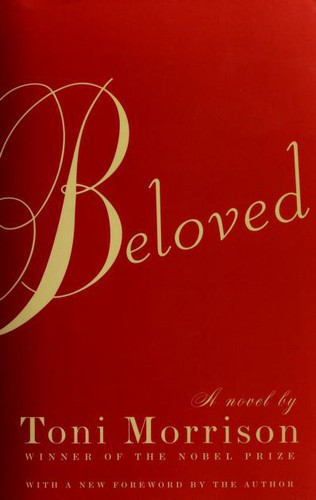
Most critics consider Beloved her masterpiece. The Bluest Eye is her most direct and economical — shorter, more contained, and in some ways more accessible, though Morrison's prose is demanding throughout her career. For readers new to Morrison, it is a reasonable starting point.
-
How difficult is The Bluest Eye to read?
It is not difficult in terms of vocabulary, but Morrison's formal choices — multiple perspectives, time shifts, the fractured primer — require attention. The novel is short, around 160 pages, and rewards rereading.
-
Why has The Bluest Eye been banned?
It has been challenged repeatedly in school curricula because of its depictions of child sexual abuse, racial violence, and explicit content. Morrison consistently argued that the novel's difficult content is inseparable from its social purpose.
-
Who should read The Bluest Eye?
Readers of American literary fiction, students of African American literature and cultural history, and anyone interested in how race operates in interior life. It is also essential reading for anyone thinking about the relationship between representation in media and self-image in children.